



Quick Answer
- Investment property in Dubai delivers 6.98% average new contract yields as of April 2026, more than double Sydney’s 2% to 4%
- Dubai charges zero personal income tax, zero capital gains tax, and zero annual property tax on the UAE side
- Australian property purchases in Dubai have more than doubled since 2022, with Australians now among the top Western nationalities buying
- Entry starts from AED 500,000 with interest-free developer payment plans from 10% upfront
- Australian residents must declare Dubai rental income to the ATO, though legitimate deductions reduce the liability significantly
Sydney’s median house price now sits at approximately AUD 1.75 million. Gross rental yields across most Australian capital cities hover between 2% and 4%. After income tax at marginal rates, land tax, and management fees, most investors net below 2%. That is the context in which investment property in Dubai has become a serious conversation for thousands of Australians in 2026.
As Australian Property Investor Magazine reported, Australian property purchases in Dubai have more than doubled since 2022. Australians now rank among the top Western nationalities buying Dubai real estate. The structural case is not complicated. Higher yields, zero UAE tax on income, lower entry prices, and a regulatory framework that rivals any mature market in the world.
This guide gives you the complete, honest picture. You will learn exactly how investment property in Dubai compares to the Australian market, which property types and areas deliver the strongest returns, how the buying process works from Australia, and what you must understand about your ATO obligations before committing capital.
Why Dubai Beats Australian Yields?

The yield gap between Dubai and Australia is the starting point of every serious conversation about investment property in Dubai. It is structural, not cyclical.
Yield Comparison
The table below compares investment property in Dubai directly against Australian capital cities using verified 2026 data:
| Market | Gross Yield | Entry Price | Tax on Rental Income | Net Yield Est. |
| JVC, Dubai | 7% to 9% | AED 685,000 (AUD 280,000) | 0% UAE | 5.5% to 7.5% |
| Dubai South | 7% to 9% | AED 490,000 (AUD 200,000) | 0% UAE | 5.5% to 7.5% |
| Business Bay, Dubai | 7% to 8.5% | AED 1,200,000 (AUD 490,000) | 0% UAE | 5.5% to 7% |
| Sydney, Australia | 2.8% to 3.5% | AUD 750,000+ | 37% to 45% marginal | 1.5% to 2% |
| Melbourne, Australia | 3.1% to 3.8% | AUD 650,000+ | 37% to 45% marginal | 1.8% to 2.2% |
| Brisbane, Australia | 3.8% to 4.2% | AUD 550,000+ | 37% to 45% marginal | 2% to 2.5% |
According to Resura Real Estate’s February 2026 market overview, Dubai delivered AED 686.8 billion in total real estate sales value in 2025, the highest on record, up 31% year-on-year. Across 215,736 total property transactions, average rental yields sat at 7%. Sydney’s 2% to 4% is not in the same conversation.
Tax Structure
Dubai charges zero personal income tax on rental earnings from investment property in Dubai. Zero capital gains tax. Zero annual property tax. As Weiss Real Estate’s March 2026 analysis confirms, Dubai is not a tax escape for Australians, but it is structurally more income-efficient than any Australian capital city.
The Australian Taxation Office requires Australian residents to declare all overseas rental income at their marginal rate. Since Dubai charges nothing, no foreign tax offset is available. However, legitimate deductions including management fees, service charges, depreciation, and financing costs reduce the effective Australian tax liability significantly.
Currency & Diversification
The AED is pegged to the USD at a fixed rate of 3.67, a peg that has held since 1997. As the Dubai Invest Australia guide notes, a stronger AUD improves buying power for investment property in Dubai, while a weaker AUD increases effective returns when converted back. Currency planning around off-plan milestone payments matters more than any other single operational decision.
For Australian investors holding concentrated domestic portfolios, Dubai real estate provides genuine currency and market diversification. The AED peg creates USD-linked exposure that historically performs well during periods of AUD weakness driven by commodity cycle downturns.
Best Property Types for Australians
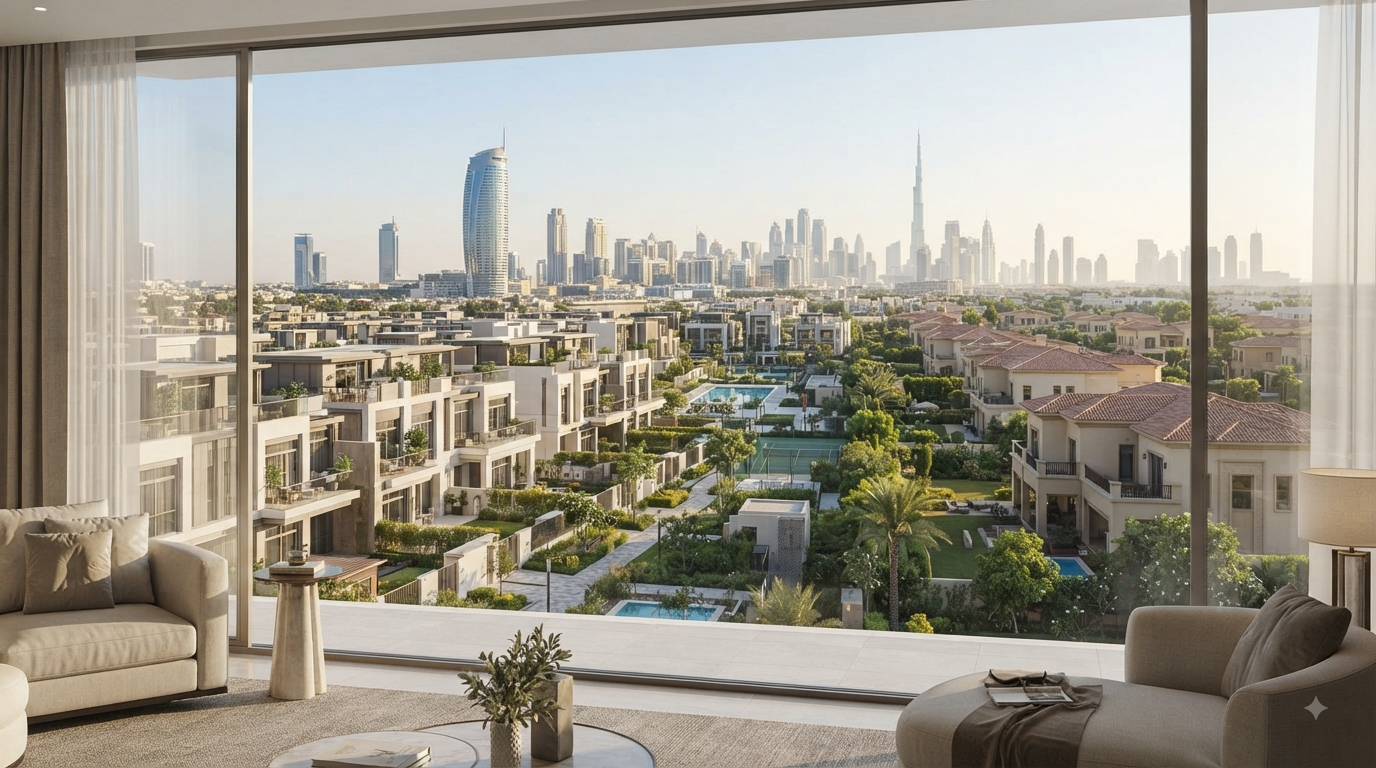
Different property types within Dubai’s investment property market serve different Australian investor profiles. Understanding which type fits your goals prevents mismatches between strategy and asset that erode returns over time.
Studio to Two-Bedroom
Apartments are the most practical entry point for Australian investors in investment property in Dubai. Studios and one-bedroom units offer lower purchase prices, broader tenant demand, and easier remote management than any other property type.
According to Engel and Volkers’ April 2026 yield data, the average rental yield for new contracts stood at 6.98% as of April 2026, with apartment yields outperforming villas significantly. Studios in high-demand communities like JVC and Dubai South achieve 7% to 9% gross. One-bedroom apartments in Business Bay and Dubai Marina deliver 7% to 8.5% from professional tenants on annual leases.
Entry prices for studios start from approximately AED 490,000 (around AUD 200,000) in Dubai South. One-bedroom apartments in JVC begin around AED 685,000 (approximately AUD 280,000). These price points allow Australian investors to hold multiple units for the cost of a single domestic investment, spreading vacancy risk across a diversified portfolio.
Off-Plan vs Ready Properties
Off-plan investment property in Dubai offers staged payment plans, early-cycle pricing, and appreciation between purchase and handover. Ready properties generate rental income from day one and carry no construction timeline risk. The right choice depends entirely on your cash flow requirements and investment horizon.
Off-plan works best for Australian investors with a 3 to 5 year horizon who want to capture appreciation during construction without needing immediate rental income. As Forbes confirmed in its Dubai real estate analysis, off-plan projects typically require an initial down payment of 10% to 25%, with remaining funds spread over 3 to 5 years, usually without interest. From purchase to handover, property values in strong communities have increased between 15% and 30% in recent market cycles.
Ready properties suit investors who prioritise certainty and immediate cash flow. You inspect, verify, and begin earning rental income within weeks of registration. The trade-off is a higher entry price than equivalent off-plan units in the same community.
Villas and Townhouses
Villas and townhouses serve a different Australian investor profile. These assets attract long-term family tenants who sign multi-year leases, reducing turnover costs and vacancy risk. Capital appreciation tends to be stronger than apartments in well-established masterplanned communities.
Investors targeting the Dubai Hills property for sale segment often enter through townhouses, which offer family tenant appeal and Emaar community quality at more accessible price points than full villas. Maple Townhouses in Dubai Hills Estate start from approximately AED 3 million with rental yields around 7.5% from long-term family households.
As the Danube Properties investment guide confirms, rental yields of 6% to 10% are achievable in prime areas like JVC, Dubai Marina, and Business Bay, but the type of property you buy within those areas determines your actual outcome.
Top Areas for Investment Property in Dubai
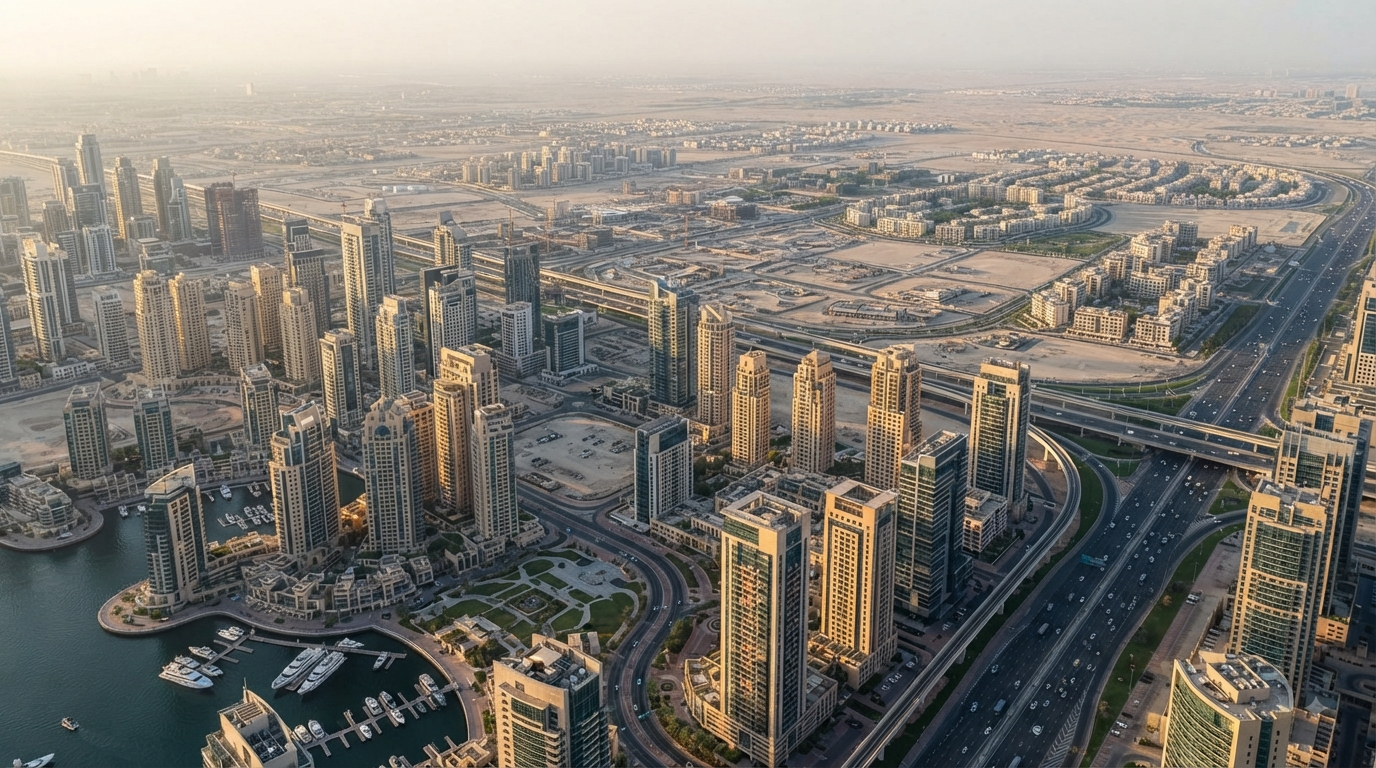
Location selection is the most consequential decision in the entire investment property in Dubai process. Different communities serve different return profiles, tenant bases, and holding strategies.
High-Yield Communities
Jumeirah Village Circle leads all communities for yield-focused investors targeting investment property in Dubai at accessible entry prices. Studio and one-bedroom apartments consistently achieve 8% to 9% gross. The community recorded over 18,000 transactions in 2025, making it the most liquid area for investors who need a clear exit pathway.
Dubai South offers similar yield profiles with even lower entry prices and the strongest long-term capital growth thesis in Dubai’s entire market. The AED 128 billion Al Maktoum Airport expansion and Expo City Dubai anchor the demand trajectory for the next decade. Entry from AED 490,000 makes it the most accessible high-yield investment property in Dubai available in 2026.
Business Bay combines yield and location. Canal-facing apartments at AED 1,200,000 to AED 1,800,000 deliver 7% to 8.5% gross from DIFC executives and finance professionals. The community’s proximity to the commercial core creates tenant demand that remains stable across market cycles.
Capital Growth Areas
Downtown Dubai, Dubai Marina, and Palm Jumeirah suit Australian investors prioritising capital preservation alongside income. Yields sit lower at 5% to 7%, but the investment thesis rests on scarcity value and global brand recognition that mainstream communities cannot replicate.
As Danube Properties note in their community guide, Downtown Dubai delivers annual capital growth above 8% consistently, anchored by the Burj Khalifa, Dubai Mall, and limited new supply entering the core zone. For Australian investors managing a long-term wealth preservation strategy, premium investment property in Dubai at these addresses serves a specific and defensible purpose.
Emerging Corridors
Dubai Creek Harbour is the most compelling emerging corridor for investment property in Dubai in 2026. Emaar’s master-planned waterfront city adjacent to Downtown Dubai, with the future Creek Tower as its landmark catalyst, offers off-plan apartments from approximately AED 1.4 million. Communities like this benefit from Australia’s most experienced investors who recognise the early-mover pattern from previous Dubai cycles, including Dubai Marina in 2003 and Business Bay in 2012.
As Emaar’s investment property guide confirms, emerging hotspots including Dubai Hills Estate, Dubai Creek Harbour, Emaar South, The Valley, and The Oasis combine luxury living with high-growth prospects for investors seeking both lifestyle and returns.
Buying Investment Property in Dubai From Australia

The purchase process for investment property in Dubai is remote-friendly at every stage. Most Australian investors complete the entire transaction without visiting Dubai. As Forbes confirms, only a passport, a 4% Dubai Land Department registration fee, and a down payment are required to initiate the process.
Step-by-Step Purchase Process
Australian investors follow this exact sequence when acquiring investment property in Dubai:
- Define your goal: rental income, capital growth, Golden Visa, diversification, or a combination
- Engage a RERA-licensed broker and review shortlisted projects with verified escrow registration
- Pay a reservation deposit of AED 5,000 to AED 50,000 to secure your chosen unit
- Sign the Sales Purchase Agreement digitally or through a Power of Attorney representative
- Complete staged payments per schedule into the RERA-regulated escrow account only
- Receive DLD title deed at completion or Oqood interim registration for off-plan
All payments for off-plan investment property in Dubai go into a RERA-regulated escrow account. Independent engineers verify each construction milestone before any funds are released to the developer. Verify the escrow account number independently through the Dubai Land Department before any transfer.
Australian Tax Obligations
Understanding your ATO position before purchasing investment property in Dubai is non-negotiable. The Australian Taxation Office requires Australian tax residents to declare all overseas rental income and capital gains on their annual return. Since Dubai charges zero tax, no foreign tax offset applies.
Legitimate deductions reduce your effective liability. Management fees, service charges, maintenance, depreciation on furniture packages, and financing interest are all deductible against your Dubai rental income. For Australian investors using negative gearing, losses from Dubai investment property where expenses exceed income can offset domestic assessable income under the same rules that apply to Australian properties.
Golden Visa Opportunity
Investment property in Dubai at AED 2 million or above qualifies Australian buyers for the 10-year UAE Golden Visa. As API Magazine’s September 2025 analysis confirms, the Golden Visa grants renewable 10-year residency for the investor and their families with qualifying purchases from AED 2 million, approximately AUD 840,000. This residency converts your investment property in Dubai into a long-term base in a zero-income-tax jurisdiction with no employment sponsorship required.
Understanding the complete off-plan properties Dubai landscape before purchasing helps you choose between primary and secondary market options with full knowledge of the timeline and risk profile attached to each.
Why 2026 Is the Year to Act
The evidence for investment property in Dubai in 2026 is unusually clear. Resura Real Estate confirms that Dubai recorded 215,736 total property transactions in 2025, up 18.7% year-on-year, with average transaction prices growing 6.7% and average rental yields sitting at 7%, one of the strongest ranges globally.
Australian investors who understand both the risks of buying property in Dubai and the structural yield advantage it provides over domestic markets are making the most informed capital allocation decisions available to them in 2026. The combination of 7% average yields, zero UAE tax on income, entry from AUD 200,000, and a mature remote purchasing infrastructure creates an opportunity that no Australian capital city can match.
Schedule your free investment property consultation at Bright Realty International and make your 2026 capital allocation decision with complete information.
Frequently Asked Questions
Is investment property in Dubai a good idea for Australians in 2026?
Dubai recorded 215,736 total property transactions in 2025 at AED 686.8 billion total value, up 31% year-on-year. Average rental yields sit at 7% compared to Sydney’s 2.8% to 3.5%. Zero UAE tax on rental income, lower entry prices from AED 490,000, and a remote-friendly purchase process make investment property in Dubai structurally compelling for Australians. The key is selecting the right area, developer, and property type while understanding your ATO obligations before committing.
What rental yield can Australians expect from Dubai investment property?
As of April 2026, the average rental yield for new contracts in Dubai stood at 6.98%, with apartments outperforming villas significantly. High-yield communities like JVC and Dubai South achieve 7% to 9% gross on well-selected studios and one-bedroom units. After service charges, management fees, and Australian income tax obligations, realistic net yields sit between 4.5% and 7% depending on community and your marginal tax rate. That net figure still significantly outperforms Sydney’s 3.1% gross before any Australian tax is applied.
Do Australian investors pay tax on Dubai rental income?
Dubai charges zero personal income tax on investment property in Dubai. However, the Australian Taxation Office requires Australian tax residents to declare all overseas rental income at their full Australian marginal rate. No foreign tax credit is available since Dubai collected nothing. Legitimate deductions including management fees, service charges, depreciation, and financing costs reduce the effective liability. Model your precise after-tax net yield with a specialist accountant before purchasing.
What is the minimum budget to start with investment property in Dubai?
Studios in Dubai South and JVC start from approximately AED 490,000 to AED 685,000 (around AUD 200,000 to AUD 280,000). Developer payment plans reduce your initial outlay to as little as 10% at booking, meaning AUD 20,000 to AUD 28,000 secures your unit with remaining payments spread interest-free across construction milestones. Golden Visa eligibility requires AED 2 million (approximately AUD 820,000), which encompasses most townhouse and villa options across major master planned communities.
How does Australian negative gearing apply to Dubai investment property?
As Weiss Real Estate confirms, Australian investors who borrow to purchase investment property in Dubai and whose financing costs and allowable expenses exceed rental income can offset those losses against their Australian assessable income under standard negative gearing rules. This is the same principle that applies to Australian investment properties. The net benefit depends on your marginal tax rate, borrowing costs, and Dubai rental income level. An accountant familiar with both the ATO framework and UAE property structures provides the most accurate modelling for your specific situation.