




Quick Answer
- The primary benefits of buying property in Dubai include zero UAE tax on rental income, capital gains, and property ownership
- As of May 2026, the average rental yield in Dubai was 6.68%, with apartments averaging 7.15%, far above Sydney’s 3.1%
- Australian investors can access freehold ownership from AUD 200,000 with interest-free payment plans from 10% upfront
- Properties at AED 2 million or above qualify for a 10-year UAE Golden Visa for the investor and family
- The entire purchase process is completed remotely from Australia without visiting Dubai
Sydney gross yields sit at 3.1%. Melbourne averages 3.6%. After Australian income tax, land tax, and strata fees, most investors net below 2%. Meanwhile, the benefits of buying property in Dubai are quietly being sought by thousands of Australian investors already positioned in the market.
Zero tax on rental income. Zero capital gains tax. Zero annual property tax. Yields averaging 6.68% city-wide and reaching 8% to 10% in high-demand communities. Entry from AUD 200,000. The numbers do not require interpretation. They speak directly to every Australian investor watching their domestic returns erode year after year.
This guide covers every major benefit of buying property in Dubai that Australian investors should understand before making their decision in 2026. You will learn the tax structure, yield data, ownership rights, residency pathways, and market fundamentals that make Dubai one of the most compelling property investment destinations for Australians right now.
The Tax-Free Environment Advantage
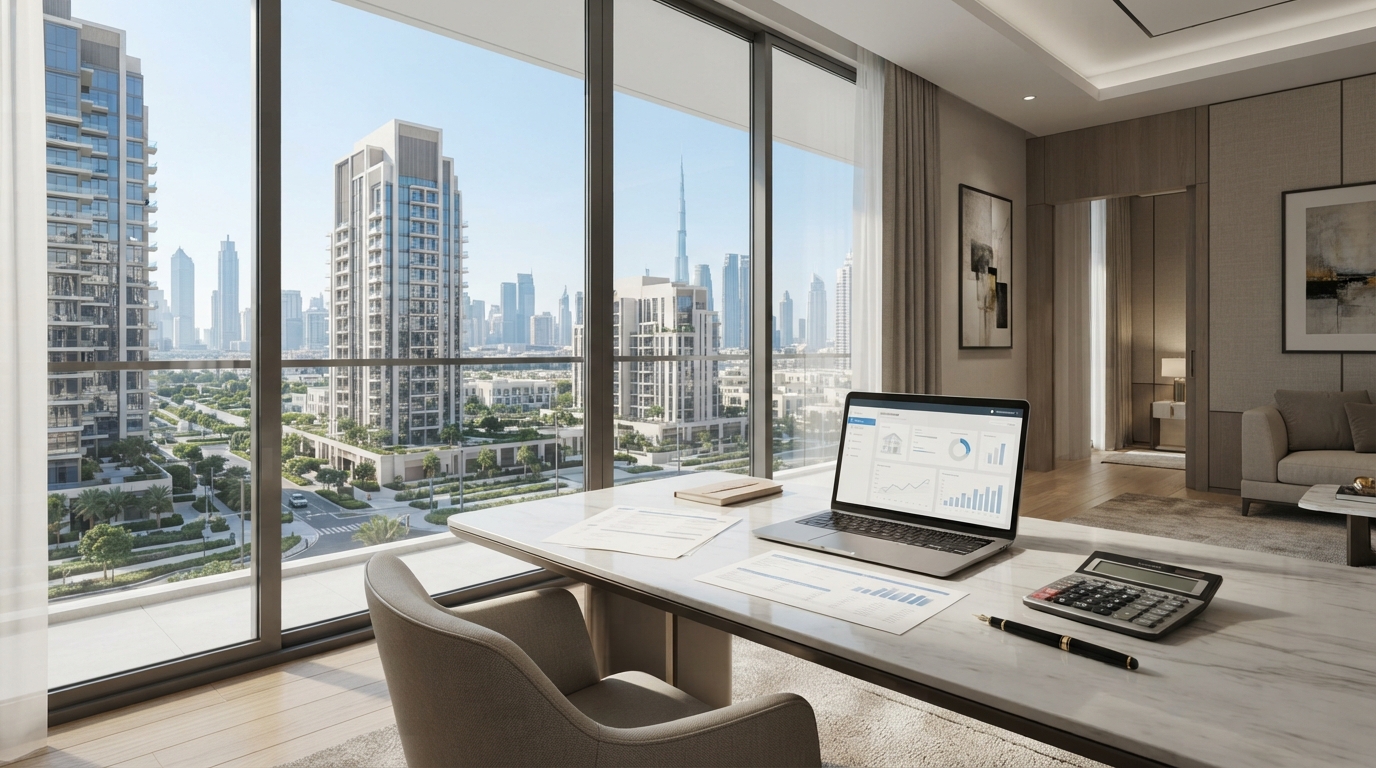
The single most powerful benefit of buying property in Dubai for Australian investors is the absence of recurring tax obligations on the UAE side. No rental income tax. No capital gains tax. No annual property tax. No inheritance tax. While Australia’s land taxes and capital gains continue to rise in 2026, Dubai remains a 100% tax-efficient environment for rental yields, where owning a freehold apartment triggers no ongoing municipal or council tax whatsoever.
Zero Rental Income Tax
Dubai charges zero personal income tax on rental earnings from property. Every dollar your Dubai investment generates stays in your account. Gross rent collected in Dubai is not taxed locally. Individual property investors, both residents and non-residents, are generally exempt from the 9% UAE Corporate Tax on personal rental income.
Furthermore, the Australian Taxation Office requires Australian residents to declare Dubai rental income on their annual Australian tax return. However, legitimate deductions, including property management fees, service charges, depreciation, and interest on borrowings, reduce that liability significantly.
Zero Capital Gains Tax
Whether you flip an off-plan unit on handover or hold for ten years, the UAE currently imposes zero capital gains tax on individuals. This is particularly attractive for Australian investors who plan to reinvest proceeds within the region.
Australian CGT rules still apply on the Australian side when you eventually sell, but the 50% CGT discount for assets held over 12 months reduces the liability substantially. The key advantage is that no UAE tax erodes your capital gain before Australian CGT applies, meaning you keep the full profit on the UAE side.
Zero Annual Property Tax
Australia imposes land tax annually in every state except the Northern Territory. In New South Wales, land tax at 1.6% plus a fixed threshold applies to investment properties. In Victoria, land tax rates step up from 0.2% to 2.25% depending on the value.
Dubai has no equivalent. Owners of Dubai property only pay service charges set by RERA’s Mollak platform, which is effectively a building operating budget, not a government tax. These range from AED 10 to AED 40 per square foot annually and are the only recurring cost beyond property management fees.
High Rental Yields and Returns
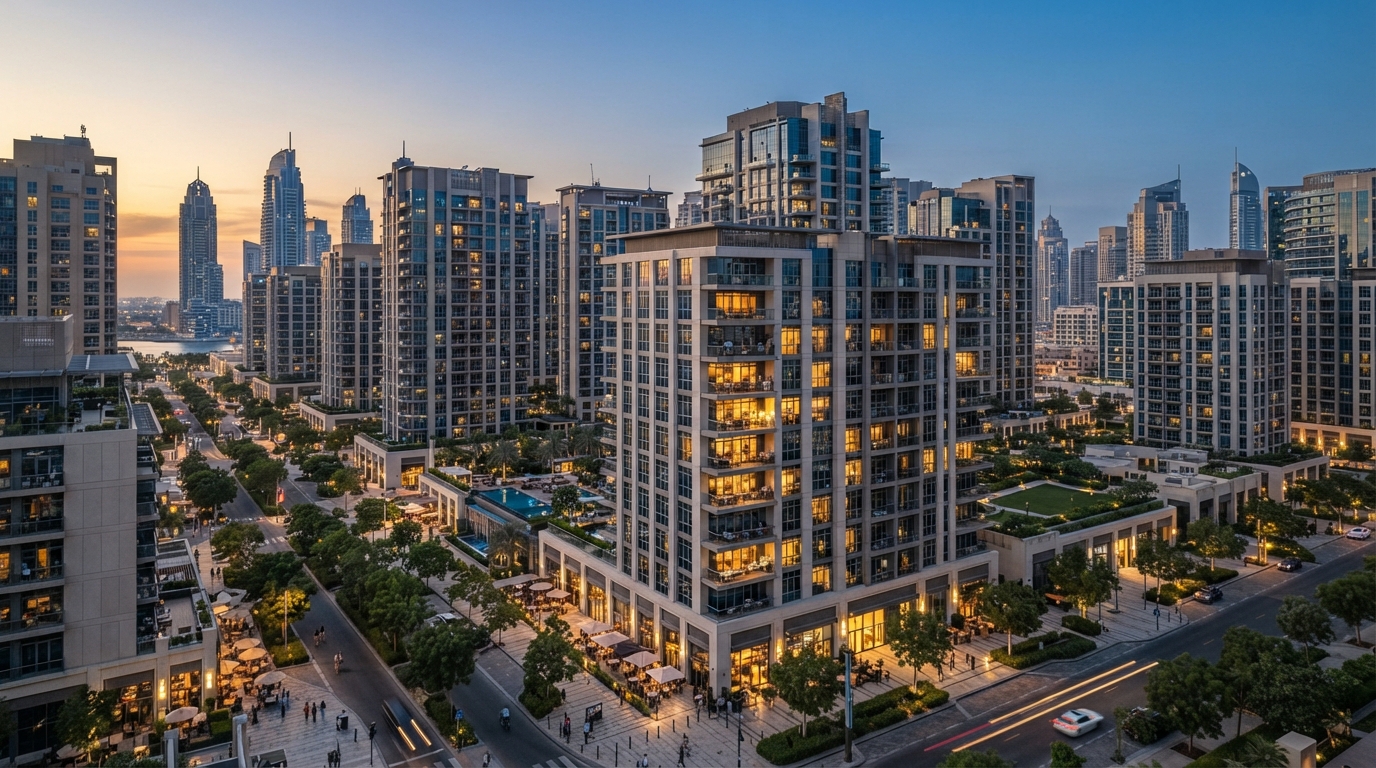
The yield benefit of buying property in Dubai is the most frequently cited advantage among Australian investors, and the data consistently supports that attention. Dubai’s rental market operates at a fundamentally different income level than any Australian capital city.
Yield by Community
The table below compares rental yields across Dubai’s major investment communities against Australian capitals, using 2026 market data:
| Location | Gross Rental Yield | Entry Price From | Net Yield Est. |
| JVC, Dubai | 8% to 10% | AED 685,000 (AUD 280,000) | 6.5% to 8% |
| Dubai South | 7% to 9% | AED 490,000 (AUD 200,000) | 5.8% to 7.5% |
| Business Bay, Dubai | 7% to 9% | AED 1,200,000 (AUD 490,000) | 5.5% to 7% |
| Dubai Marina | 6% to 8% | AED 1,500,000 (AUD 615,000) | 5% to 6.5% |
| Sydney, Australia | 2.8% to 3.5% | AUD 750,000 | 1.5% to 2% net |
| Melbourne, Australia | 3.1% to 3.8% | AUD 650,000 | 1.8% to 2.2% net |
In prime areas like Dubai Marina, Business Bay, and JVC, average yields range from 6% to 9% annually, significantly higher than the 2% to 4% typical in Australian cities like Sydney or Melbourne.
Short-Term Rental Premium
A further benefit of buying property in Dubai is the short-term rental market. In 2025, Dubai welcomed 19.59 million international overnight visitors, representing a 5% increase year-on-year and a third consecutive record-breaking year for tourism. That visitor volume supports premium nightly rates in well-located communities.
Licensed short-term rental apartments in Dubai Marina, Downtown Dubai, and Palm Jumeirah consistently command nightly rates that push effective annual yields above the standard long-term tenancy rates. Australian investors with appropriately licensed units can earn premium returns during peak tourism and business event periods.
Income Compounding Over Time
The compounding effect of earning 7% tax-free versus 2% after tax over a 10-year hold is significant. An AUD 400,000 investment earning 7% net generates AUD 28,000 annually. At 2% net, the same capital generates AUD 8,000. Over 10 years, that difference is AUD 200,000 in cumulative income before capital appreciation is considered.
Additionally, properties held through strong tenant demand periods in Dubai’s high-yield communities historically appreciate in value during the hold, creating a dual return profile that purely income-focused Australian properties rarely match.
Dubai recorded one of its strongest years on record in 2025, with 202,349 residential transactions totalling AED 546.8 billion. As of May 2026, the average rental yield in Dubai was 6.68%, with apartments averaging 7.15% and villas and townhouses averaging 4.98%. Those averages include the entire city. Well-selected communities consistently outperform them.
Freehold Ownership and Legal Rights

A critical benefit of buying property in Dubai that many first-time overseas buyers underestimate is the strength and permanence of the ownership framework. This is not a lease arrangement. It is a full, unconditional freehold title.
Permanent Title Deed Rights
The Dubai Land Department issues every freehold purchaser a government-backed title deed. Your freehold title carries full rights to sell, lease, mortgage, gift, or bequeath the property at any time without seeking government approval. All transactions are transparently recorded, and escrow accounts are mandatory for off-plan purchases, making the Dubai market one of the most regulated and transparent property systems globally for international buyers.
Furthermore, the Dubai Land Department maintains a blockchain-verified ownership registry. No competing claim can override a properly registered DLD title deed. For Australian investors purchasing remotely, this digital infrastructure provides verifiable ownership security through the Dubai Land Department’s official registry at any time.
No Residency Required
You do not need UAE residency to purchase freehold property in Dubai. You do not need to visit Dubai during the transaction. The entire purchase process, from reservation through to title deed registration, is completed remotely from Australia using digital contracts, international wire transfers, and Power of Attorney arrangements.
This accessibility is a specific benefit of buying property in Dubai that distinguishes it from many other international markets where local presence, sponsorship, or residency is required for foreign ownership. Australian investors can own and manage a fully performing Dubai investment property without ever leaving home.
RERA Escrow Protection
For off-plan purchases, RERA’s mandatory escrow law protects every dollar of your investment throughout construction. Developers must deposit all buyer funds into regulated escrow accounts. Independent engineers verify each construction milestone before any release of funds.
If a developer fails to meet obligations, RERA intervenes to reassign the project or arrange refunds from the escrow account. This investor protection framework is one of the most comprehensive in global real estate and a core benefit of buying property in Dubai compared to less-regulated international markets.\
Foreigners can purchase property in designated freehold areas, which include some of the most desirable locations in the city, such as Dubai Marina, Downtown Dubai, and Palm Jumeirah, with full ownership rights and no requirement for a UAE sponsor.
Golden Visa and Residency Benefits
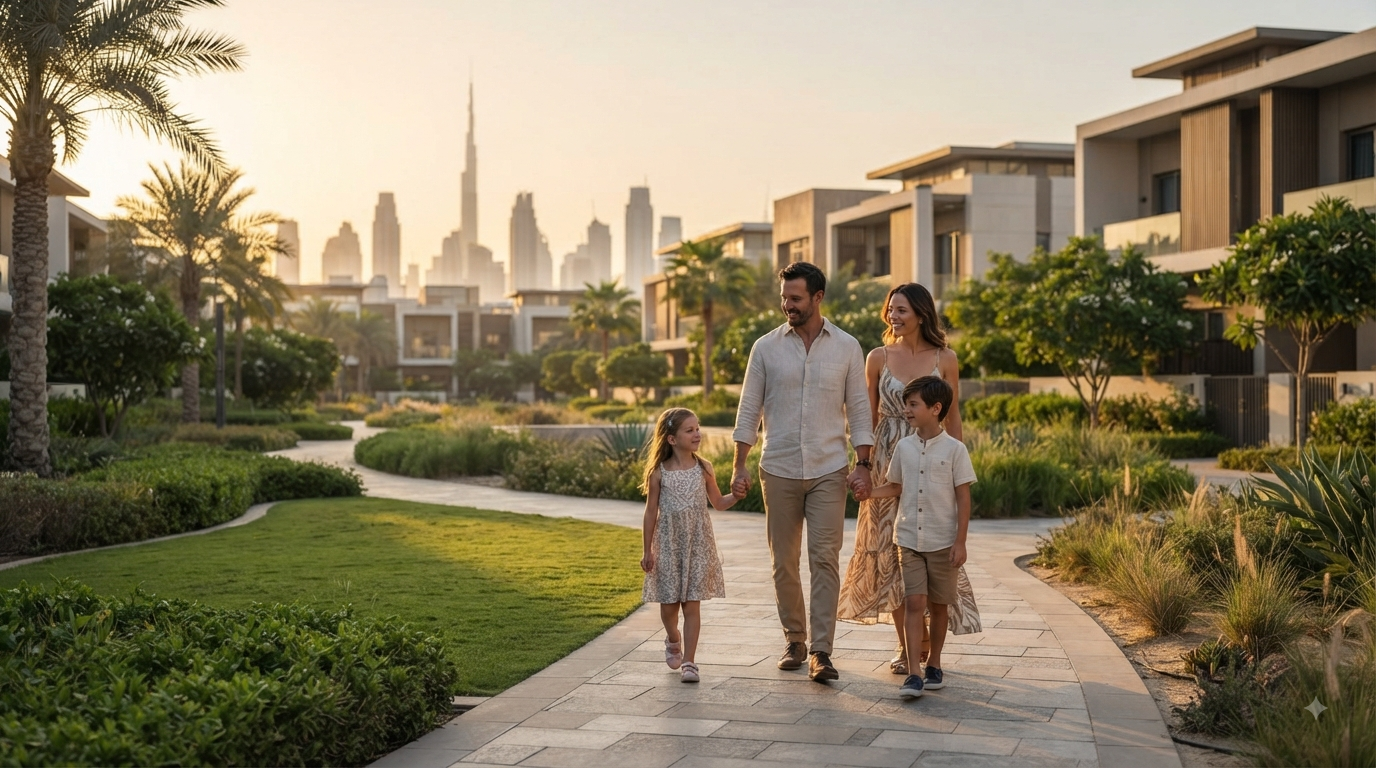
The UAE Golden Visa is an increasingly significant benefit of buying property in Dubai for Australian investors planning long-term wealth structures, extended stays, or family-based residency in a zero-income-tax jurisdiction.
Golden Visa Benefits
The 10-year UAE Golden Visa extends to your spouse and dependent children. It requires no employment sponsorship. It carries no minimum stay requirement to maintain validity. For Australian investors structuring their wealth across two jurisdictions, the Golden Visa provides a legitimate long-term base in a zero-income-tax environment.
Practical benefits beyond residency include access to UAE banking accounts, which simplifies rental income management. It enables business registration in the UAE free zones with 100% foreign ownership. It grants access to the UAE healthcare and education systems for covered family members.
Purchase for Golden Visa
Many Australian investors structure their Dubai portfolio specifically to cross the AED 2 million threshold. Two properties in high-yield communities like Business Bay or Dubai Marina can achieve this target at lower individual unit prices than a single premium purchase.
Speak with a Bright Realty International advisor before finalising your purchase structure. The title deed arrangement affects Golden Visa eligibility in ways that are not always obvious from project marketing materials. Correct structuring from the outset avoids costly remediation later.
Off-Plan Payment Plan Access
A practical financial benefit of buying property in Dubai is the interest-free payment plan structure available from most developers. You can secure an asset with a smaller upfront deposit and stage remaining payments across construction milestones, such as 60/40 or 20/80 structures, until project handover, allowing investors to control property growth with less initial capital.
Your AUD 25,000 to AUD 40,000 initial booking deposit secures a property worth AUD 250,000 to AUD 400,000. No interest applies to the staged payments. Rental income after handover can fund your remaining obligations without additional capital deployment from Australia.
Benefits by Investor Profile
Different Australian investors extract different benefits from Dubai property depending on their goals and capital position. This table maps the key benefits of buying property in Dubai to each investor type:
| Investor Type | Primary Benefit | Key Stat | Recommended Community |
| Yield-focused investor | Zero tax on 7% to 9% gross yield | 7.15% avg apartment yield May 2026 | JVC, Dubai South |
| High-income earner | Removes 37% to 45% marginal tax on rental income | ATO marginal rate vs 0% UAE | Business Bay, Marina |
| Capital growth buyer | Off-plan appreciation 15% to 25% by handover | DLD Q1 2026 transaction data | Dubai Creek Harbour |
| Golden Visa seeker | 10-year UAE residency for self and family | AED 2M threshold | Downtown, Palm Jumeirah |
| SMSF investor | Compliant overseas diversification at 7%+ yield | Subject to ATO compliance | JVC, Dubai Hills |
| First-time overseas buyer | Remote purchase, no travel required | Full process via POA | JVC, Dubai South |
Investing in property valued at AED 2 million or more grants a 10-year Golden Visa, while an investment of AED 1 million qualifies for a 2-year residency visa, giving Australians the right to live, work, and retire in Dubai with 100% foreign business ownership and no local sponsor requirements.
Start Capturing the Benefits in 2026
The benefits of buying property in Dubai are not theoretical advantages for future consideration. They are financial realities that thousands of Australian investors are capturing right now while domestic yields continue their structural decline.
Zero UAE tax on rental income. Yields averaging 7.15% on apartments. Permanent freehold title. Interest-free payment plans from 10% upfront. Golden Visa residency from AED 2 million. Remote purchasing from anywhere in Australia. Each benefit addresses a specific limitation of the Australian property market that income-focused investors face in 2026.
Schedule your free consultation at Bright Realty International and start capturing the benefits of Dubai property investment in 2026.
Frequently Asked Questions
What are the main benefits of buying property in Dubai for Australians?
Dubai offers higher rental yields, zero UAE tax on rental income, and freehold ownership for foreign buyers. Investors can also qualify for the UAE Golden Visa through eligible property purchases. These advantages make Dubai attractive for both income and long-term growth.
Is Dubai property genuinely tax-free for Australians?
Dubai does not charge income tax, capital gains tax, or annual property tax on real estate investments. However, Australian residents must still declare overseas rental income and capital gains to the ATO. Professional tax advice can help investors structure ownership efficiently.
What rental yields can Australians realistically earn from Dubai property?
Dubai apartments typically generate rental yields between 6% and 10%, depending on the community and property type. Areas such as JVC and Dubai South often deliver some of the strongest returns. Even after expenses, yields generally remain higher than many Australian markets.
How does the Golden Visa benefit Australian property investors?
Property investments meeting the required threshold can qualify buyers for a 10-year UAE Golden Visa. The visa can also extend to eligible family members and provides access to banking, healthcare, and business opportunities. It adds an additional lifestyle benefit beyond investment returns.
Can Australians really buy Dubai property without visiting?
Yes. Most of the purchase process can be completed remotely using digital documentation and Power of Attorney arrangements. Buyers can review properties online, sign contracts electronically, and transfer funds securely. This makes Dubai property investment accessible from anywhere in Australia.