



Quick Answer
- Buying property in Dubai for foreigners is fully legal in 60-plus designated freehold zones across the city as of 2026
- No UAE residency, local sponsor, or UAE bank account is required — only a valid Australian passport
- The one-time Dubai Land Department transfer fee is 4% of the property price with zero annual property tax or capital gains tax
- Three residency visa pathways exist: 2-year investor visa from AED 750,000, 5-year retirement visa from AED 1,000,000, and 10-year Golden Visa from AED 2,000,000
- Australian residents must declare Dubai rental income to the ATO, though zero UAE tax applies and legitimate deductions reduce the liability
Australia has much higher entry prices, higher holding costs, and lower cash flow than Dubai. That structural gap is driving thousands of Australians to explore buying property in Dubai under foreign laws, many of them discovering for the first time how open and straightforward the market actually is.
As Real Estate Club Dubai confirms, foreigners can own property in Dubai under 100% freehold ownership, meaning you hold the title deed in your name with no local partner, no sponsor, and no expiry date. Buying property in Dubai for foreigners was established by Law No. 7 of 2002 and has been progressively strengthened through 2026 to protect international capital.
This guide gives you the complete legal picture. You will learn the exact eligibility rules, which zones Australians can buy in, the step-by-step purchase process, every cost you must budget for, inheritance protections, mortgage options, and residency visa pathways that buying property in Dubai makes available.
Legal Framework for Foreign Buyers

According to EGSH’s February 2026 legal update, foreigners can legally purchase freehold property in over 40 designated areas across Dubai with no visa or residency required. Law No. 7 of 2006 on Real Property Registration established this right, with Regulation No. 3 of 2006 defining the geographic boundaries.
Freehold Law Foundation
Dubai’s freehold ownership law for foreigners was one of the most significant real estate policy decisions in Middle Eastern history. Since the landmark 2002 decree, non-UAE nationals have held full legal rights to purchase, sell, lease, and inherit property in designated freehold zones.
As Sands of Wealth’s April 2026 analysis confirms, as of early 2026, the main rule that affects most purchases is that foreigners can only buy in designated freehold areas, with no nationality-based quotas or caps on the number of properties you can own in those zones. Unlike some countries, Dubai imposes no foreign ownership quota on apartments, meaning no limit exists on how many units in a building can be owned by non-UAE nationals in freehold areas.
The Dubai Land Department issues every buyer a government-registered title deed confirming full ownership rights including the right to sell, lease, mortgage, or bequeath the property without restriction. This registration now operates on a blockchain-validated system, making title fraud virtually impossible.
Freehold vs Leasehold
Buying property in Dubai for foreigners involves understanding two distinct ownership types. Freehold gives you full title to the property and the land it sits on with no time restrictions. Leasehold grants the right to occupy a property for up to 99 years without ownership of the underlying land.
For Australian investors, freehold is always the relevant structure. As Mavrix Properties’ 2026 guide clarifies, a valid passport is sufficient to begin the freehold transaction, and no prior government approval is needed for purchases within designated zones.
Non-designated areas including Deira, Bur Dubai, Karama, Satwa, and old Jumeirah remain off-limits for foreign freehold ownership. As Real Estate Club Dubai’s freehold zones guide confirms, always verify an address sits inside a designated zone before signing through the Dubai REST app or directly with the DLD.
What the Title Deed Covers
The title deed issued at completion represents absolute, permanent ownership. It covers the physical unit, your proportional share of common areas, and, in villa purchases, typically the land plot. The DLD registers the deed in your personal name as an Australian citizen with no intermediary ownership requirement.
According to Westgate Dubai’s April 2026 analysis, the 2026 landscape includes a new Instant Title blockchain rollout that makes buying property in Dubai for foreigners more digitally integrated and transparently secured than at any previous point in the market’s history. Your ownership is verifiable through the Dubai REST app at any time from anywhere in Australia.
Understanding the legal foundation behind buying property in Dubai for foreigners removes the uncertainty that stops most Australians from acting. The framework is clear, well-documented, and specifically designed to attract international capital.
Where Australians Can Buy as a Foreigner
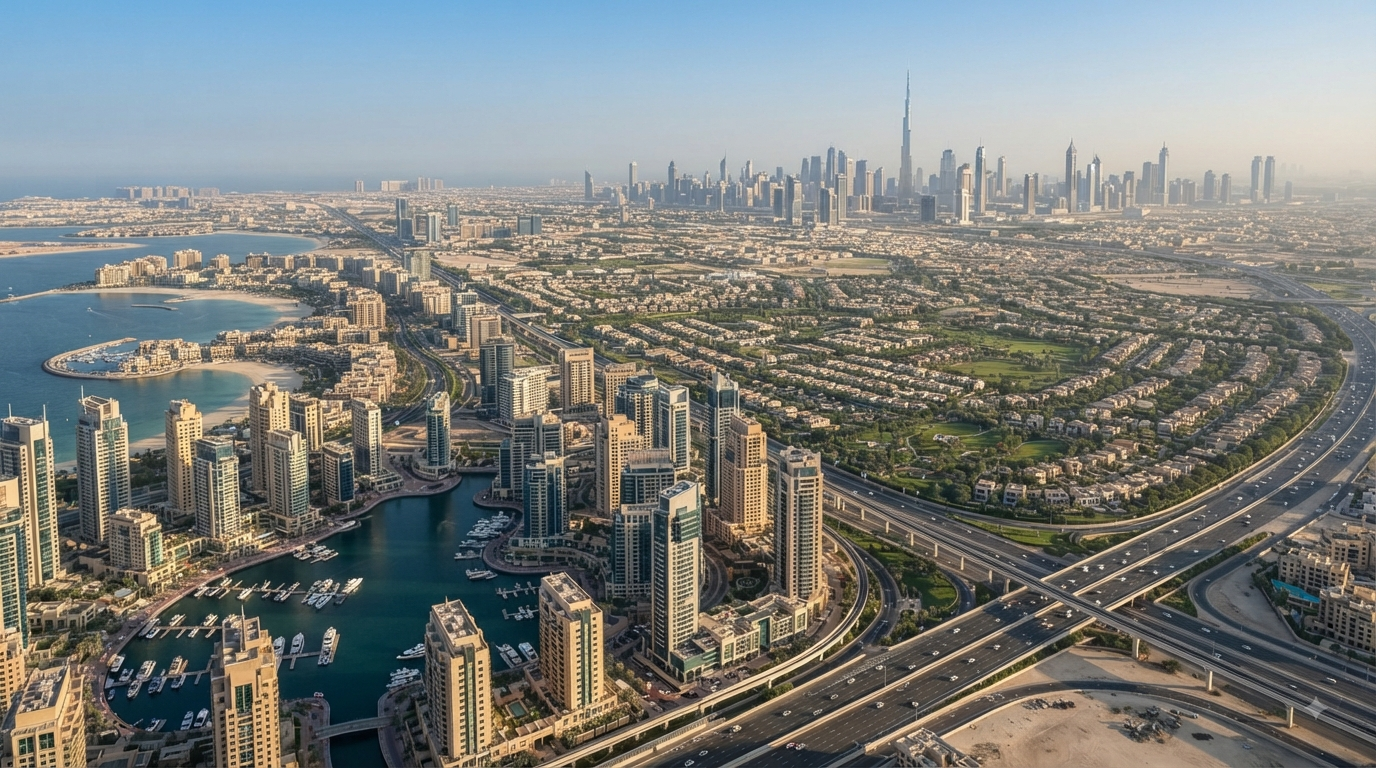
The designated freehold zone network covers roughly 40% of developed Dubai, spanning 60-plus communities as of 2026. Understanding which zones suit your investment strategy prevents the single biggest legal mistake buyers make, which is committing capital before confirming freehold status.
High-Yield Freehold Communities
Jumeirah Village Circle leads all freehold communities for yield-focused property-buying strategies in Dubai. According to McCone Properties, a studio-type villa in JVC delivers an ROI of 8.79%. Entry prices start from approximately AED 685,000 (around AUD 280,000), making JVC the most accessible high-yield freehold option for Australian first-time overseas buyers.
Dubai South is the strongest growth corridor for buying property in Dubai for foreigners in 2026. Entry prices from AED 490,000 (approximately AUD 200,000) combined with the Al Maktoum Airport expansion and Expo City Dubai create the clearest early-mover opportunity in the market. Understanding the full Dubai South properties investment thesis helps you position correctly in this corridor before infrastructure completions drive valuations higher.
Premium Freehold Zones
Dubai Marina, Palm Jumeirah, Downtown Dubai, and Business Bay form the premium tier of buying property in Dubai for foreigners. As the Real Estate Club Dubai freehold zones guide confirms, these headline zones offer foreign buyers the most globally recognised addresses, strongest resale liquidity, and most established tenant demand of any freehold area.
McCone Properties confirms a one-bedroom unit in Dubai Marina carries an expected ROI of 13.43%. The waterfront lifestyle, direct metro access, and high tourist demand support both long-term residential and short-term rental strategies within the buying property in Dubai foreigners framework.
Master-Planned Family Communities
Dubai Hills Estate and Arabian Ranches serve Australian families and investors targeting long-term tenant stability within the buying property in Dubai foreigners market. As APIL Properties’ property laws guide confirms, 2026 revisions continue to expand freehold zones and enhance legal certainty, making master-planned communities increasingly attractive for international capital.
The full investment picture for Dubai Hills property for sale confirms 18% year-on-year capital value growth in Q1 2026 with occupancy rates above 94%, making it the strongest master-planned community in the market for Australian investors targeting both yield and long-term appreciation.
As Sands of Wealth notes, popular neighbourhoods like Deira and Al Karama remain off-limits for full foreign ownership. The buying property in dubai foreigners opportunity is concentrated in purpose-built investment communities that offer strong yield, capital growth, and lifestyle appeal simultaneously.
Complete Freehold Zones Reference
The table below shows the primary freehold zones available for buying property in Dubai for foreigners, organised by investor strategy and entry price:
| Zone | Entry Price (AED) | Gross Yield | Best For | Freehold Status |
| Jumeirah Village Circle | 490,000 to 685,000 | 8% to 10% | Maximum yield | Confirmed freehold |
| Dubai South | 490,000 to 950,000 | 7% to 9% | Early-stage growth | Confirmed freehold |
| Business Bay | 1,200,000 to 2,000,000 | 7% to 8.5% | Yield + location | Confirmed freehold |
| Dubai Marina | 1,500,000 to 3,000,000 | 6% to 8% | Lifestyle + yield | Confirmed freehold |
| Dubai Hills Estate | 935,000 to 5,000,000+ | 6% to 8.5% | Family + growth | Confirmed freehold |
| Downtown Dubai | 2,500,000+ | 5.5% to 6.5% | Capital preservation | Confirmed freehold |
| Palm Jumeirah | 2,000,000+ | 5% to 7% | Golden Visa + prestige | Confirmed freehold |
Always verify freehold status independently through the Dubai Land Department’s Dubai REST app before signing any agreement. This check is free, takes minutes, and eliminates the single biggest legal risk in buying property in dubai foreigners transactions.
Step-by-Step Purchase Process

The buying property in Dubai foreigners process is straightforward when you know the exact sequence. As EGSH’s legal guide confirms, the full process for a ready property typically takes 2 to 6 weeks from signing the MOU to receiving the title deed.
Steps From Decision to Title Deed
The complete buying property in Dubai foreigners purchase sequence for Australian investors:
- Engage a RERA-licensed broker and verify their licence through the Dubai Land Department registry before proceeding
- Confirm freehold zone status for your shortlisted property via the Dubai REST app or DLD directly
- Sign the Memorandum of Understanding (MOU / Form F) and pay a 10% holding deposit into escrow
- Obtain the No Objection Certificate (NOC) from the developer confirming no outstanding dues
- Complete mortgage pre-approval if financing the purchase through a UAE bank
- Attend the DLD transfer appointment through your Power of Attorney representative in Dubai
- Pay the 4% DLD transfer fee and receive your officially registered title deed
For off-plan purchases, the Oqood system registers your interim ownership until handover, when the full title deed transfers to your name. As Mavrix Properties clarifies, off-plan purchases are protected by RERA escrow regulations, which hold all buyer funds in regulated accounts until construction milestones are independently verified.
Required Documents for Australians
Buying property in Dubai for foreigners from Australia requires minimal documentation compared to most international real estate markets. As the research document from Dubai Invest confirms, the required documents are a certified, notarised copy of your valid Australian passport, recent Australian bank statements, and proof of income for mortgage buyers; a signed MOU or Sales Purchase Agreement; and a Power of Attorney if purchasing remotely.
No UAE residency visa is required. No local sponsor. No UAE bank account for cash purchases. As LYMRE’s May 2026 legal requirements guide confirms, freehold ownership is open to non-residents purchasing entirely from overseas.
Common Mistakes to Avoid
Sands of Wealth identifies the single biggest ownership mistake foreigners make: paying a reservation deposit before verifying that the property is in a designated freehold area and that the seller is the actual registered owner through official DLD channels.
EGSH’s guide adds four more critical errors to avoid. Working with an unlicensed broker carries no legal protection in a dispute. Buying in a non-freehold area prevents obtaining a freehold title deed. Not budgeting for all transaction fees creates surprise costs. Missing mortgage pre-approval loses time-sensitive opportunities.
Most Australian investors complete every step remotely without visiting Dubai. Digital contracts, international wire transfers, and Power of Attorney arrangements handle all documentation requirements.
Costs, Taxes, and Financial Obligations
As Sands of Wealth confirms, Dubai’s 4% DLD transfer fee alone means that on an AED 2 million apartment, you pay AED 80,000 in government registration costs, making total closing costs reach 7% to 9% of the purchase price. Planning for this total from the outset protects your investment returns from the first transaction.
Complete Cost Breakdown
| Cost Item | Amount | Timing |
| DLD Transfer Fee | 4% of property value | At registration |
| RERA Agent Commission | 2% plus 5% VAT | At contract |
| Trustee and Admin Fees | AED 4,000 to AED 6,000 | At transfer |
| NOC Fee | AED 5,000 to AED 10,000 | Before transfer |
| POA Attestation (Australia) | AUD 800 to AUD 2,500 | Remote purchase |
| Oqood Registration (off-plan) | AED 3,000 to AED 5,000 | At booking |
| Annual Service Charges | AED 10 to AED 40 per sq ft | Annually |
UAE Tax Position
Dubai charges zero personal income tax on rental earnings. Zero capital gains tax. Zero annual property tax. As the research document confirms, there is 0% personal income tax on the UAE side for most individual investors buying property in Dubai for foreigners market.
However, the Australian Taxation Office requires Australian tax residents to declare all overseas rental income at their marginal rate. No foreign tax credit is available since Dubai collected nothing. Legitimate deductions including management fees, service charges, maintenance, and depreciation reduce your effective Australian tax liability. Model your precise after-tax net position with a specialist accountant before completing any purchase.
Mortgage Options for Non-Residents
Non-resident Australians can secure financing through UAE banks for buying property in Dubai for foreigners. Emirates NBD, HSBC UAE, Mashreq, and Abu Dhabi Islamic Bank all offer non-resident mortgage products. As the research document notes, typical loan-to-value ratios for non-residents run approximately 70/30 for up to 25 years. Mortgage terms are shorter than Australian equivalents, typically 10 to 25 years rather than 30.
Many Australian investors prefer developer payment plans over bank mortgages for off-plan buying property in Dubai foreigners strategies. Interest-free staged payments across construction milestones require no bank qualification and carry zero financing cost.
Understanding the complete cost structure for buying property in Dubai for foreigners prevents the surprises that derail first-time international purchases. The framework is transparent and predictable.
Residency Visa Pathways
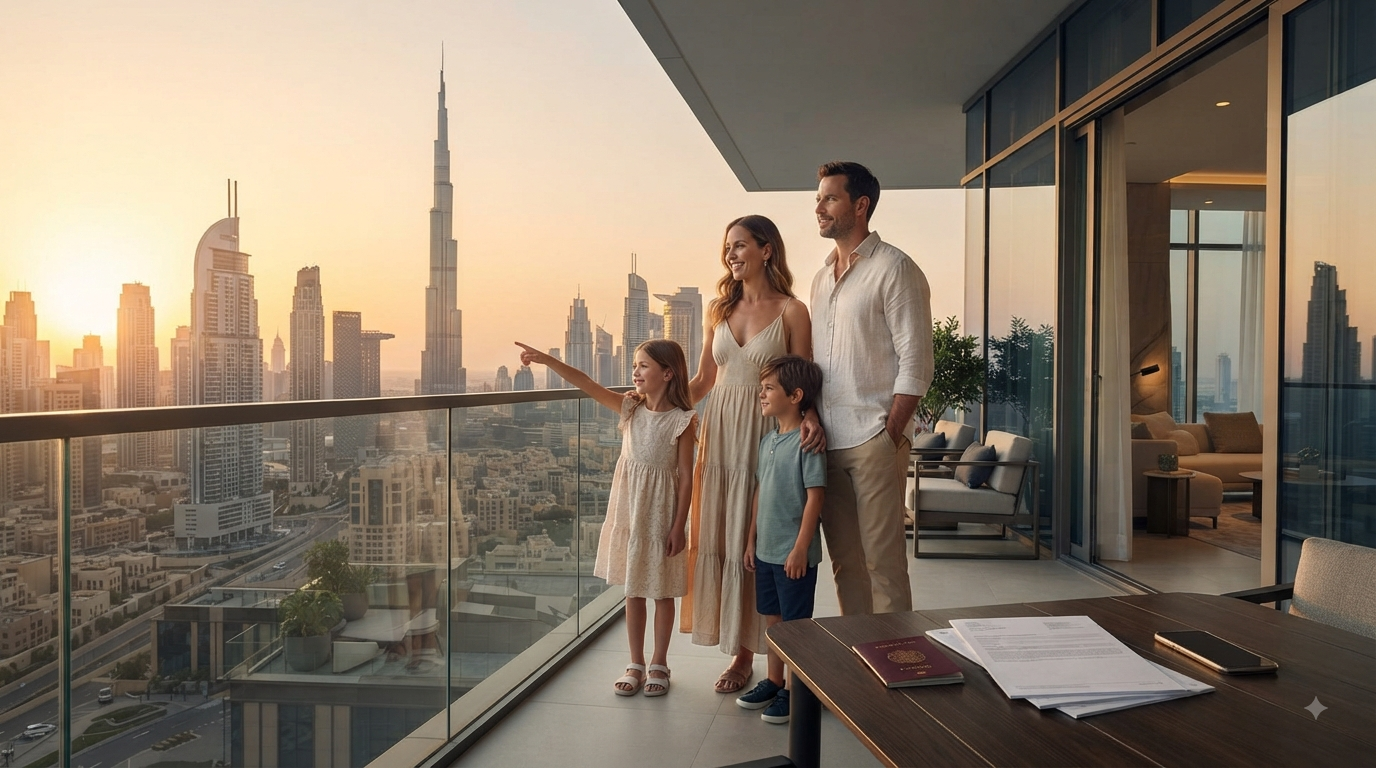
Buying property in Dubai for foreigners unlocks three distinct UAE residency visa pathways depending on your investment level. Each pathway provides legitimate long-term UAE residency without requiring employment.
Three Residency Tiers
The residency visa structure for buying property in Dubai for foreigners as of 2026 operates across three thresholds. A property valued at AED 750,000 or above qualifies for a renewable 2-year investor visa, the entry point for Australian buyers seeking UAE residency access. A property at AED 1,000,000 qualifies for a 5-year retirement visa for investors aged 55 and above with either a qualifying property, savings, or pension income.
The 10-year Golden Visa requires AED 2 million in qualifying property. As Westgate Dubai confirms, the Golden Visa provides 10-year renewable UAE residency with no employment sponsorship requirement. It extends to your spouse and dependent children and enables UAE banking access that simplifies rental income management from Australia.
Inheritance Protection for Australians
Buying property in Dubai for foreigners raises a specific legal consideration that most guides overlook. Without a registered will, Dubai property inheritance defaults to Sharia law principles, which may distribute your assets differently from your intentions as a non-Muslim Australian investor.
As the research document confirms, Australians can register a will with the DIFC Wills Service Centre to dictate who receives the property under common law principles. This registration ensures your Dubai freehold passes to your chosen beneficiaries exactly as intended. For investors holding property through corporate structures, share transfers in the relevant jurisdiction handle succession without the need for DIFC registration.
As the research document from the buying property guide confirms, properties above AED 750,000 unlock renewable residency visas while investments of AED 2 million or more grant eligibility for the 10-year Golden Visa with no local sponsor required.
Buying Property in Dubai From Australia in 2026
Buying property in Dubai for foreigners has never been more accessible, more transparent, or more legally secure than in 2026. The framework protects Australian investors at every stage, from freehold zone verification through to blockchain-validated title deed registration.
As Resura Real Estate’s market overview confirms, Australians now rank among the top Western nationalities purchasing Dubai real estate, with Australian property purchases in Dubai more than doubling since 2022. That confidence reflects direct experience with the legal framework described in this guide.
Schedule your free consultation at Bright Realty International and start your buying property in Dubai for foreigners with complete legal clarity.
Frequently Asked Questions
Can Australians legally buy property in Dubai without visiting?
Yes. Buying property in Dubai for foreigners from Australia can be completed entirely remotely through digital contracts, international wire transfers, and Power of Attorney arrangements. As EGSH’s legal guide confirms, no UAE residency or visa is required to complete a purchase, and buyers of all nationalities may acquire full ownership rights in freehold zones. Your Power of Attorney representative attends the DLD transfer appointment, receives the title deed, and manages all in-person documentation on your behalf.
What are the designated freehold zones where foreigners can buy in Dubai?
As Real Estate Club Dubai’s June 2026 freehold zones guide confirms, over 60 designated freehold communities exist across Dubai as of 2026, covering roughly 40% of the city. The most active buying property in Dubai zones for foreigners include Dubai Marina, Downtown Dubai, Business Bay, Palm Jumeirah, JVC, Dubai Hills Estate, Dubai South, Dubai Creek Harbour, and Arabian Ranches. Non-designated areas including Deira, Bur Dubai, Karama, and Al Rashidiya remain off-limits for foreign freehold. Always verify status through the Dubai Land Department before signing.
What does buying property in Dubai cost a foreigner in 2026?
Total acquisition costs for buying property in Dubai for foreigners run approximately 7% to 9% above the purchase price. As Sands of Wealth confirms, the 4% DLD transfer fee on an AED 2 million property amounts to AED 80,000 in government costs alone. Add 2% agent commission plus VAT, AED 4,000 to AED 6,000 in trustee fees, AED 5,000 to AED 10,000 NOC fee, and Power of Attorney attestation of approximately AUD 800 to AUD 2,500 for remote purchase. There is no annual property tax, no capital gains tax, and no recurring government fee after purchase.
Do Australians pay Australian tax on Dubai property income?
Yes. The Australian Taxation Office requires Australian tax residents to declare all overseas rental income at their full Australian marginal rate. Dubai charges zero personal income tax, so no foreign tax credit applies. However, legitimate deductions including property management fees, service charges, maintenance, depreciation, and financing costs reduce the effective Australian tax liability. Model your precise after-tax net yield with a specialist accountant before committing to buying property in Dubai for foreigners to understand your complete financial position.
What residency visa does buying property in Dubai give Australians?
Three residency pathways exist for buying property in Dubai for foreigners based on investment value. Properties at AED 750,000 or above qualify for a renewable 2-year investor visa. Properties at AED 1,000,000 qualify for a 5-year retirement visa for buyers aged 55-plus. Properties at AED 2,000,000 or above qualify for the 10-year Golden Visa extending to your spouse and dependent children with no employment sponsorship required. As Westgate Dubai confirms, the Golden Visa provides no permanent residency or citizenship pathway, but is renewable indefinitely as long as the qualifying property is maintained.