




Quick Answer
- The main risks of buying property in Dubai include market cycles, developer delays, currency exposure, ATO obligations, and hidden transaction costs
- Dubai experiences rapid boom-and-bust cycles driven by global economic trends, oil prices, and expatriate population shifts
- Australian residents must declare all Dubai rental income to the ATO, even though Dubai charges zero local tax
- Currency risk is real, as the AED is pegged to the USD, meaning AUD fluctuations directly affect your returns
- All risks are manageable through RERA escrow protection, verified developers, and proper pre-purchase tax structuring
Dubai’s yields look extraordinary on paper. Zero tax on rental income, 6% to 9% gross returns, and an entry from AUD 200,000 make the case compelling. But experienced investors know that every market carries risks alongside rewards, and the risks of buying property in Dubai deserve the same analytical attention as the returns.
Many Australians walk into their first Dubai purchase focused entirely on yields and miss the structural risks that experienced investors manage as a matter of routine. Currency exposure erodes returns quietly. ATO obligations catch investors off guard at tax time. Developer quality varies far more than marketing materials suggest.
This guide gives you the complete, honest breakdown of every major risk Australian investors face when buying property in Dubai in 2026, alongside practical mitigation strategies for each one. By the end, you will understand exactly what risks exist, how serious each one is, and precisely how to protect your capital before committing a single dollar.
Market Cycle and Volatility Risk
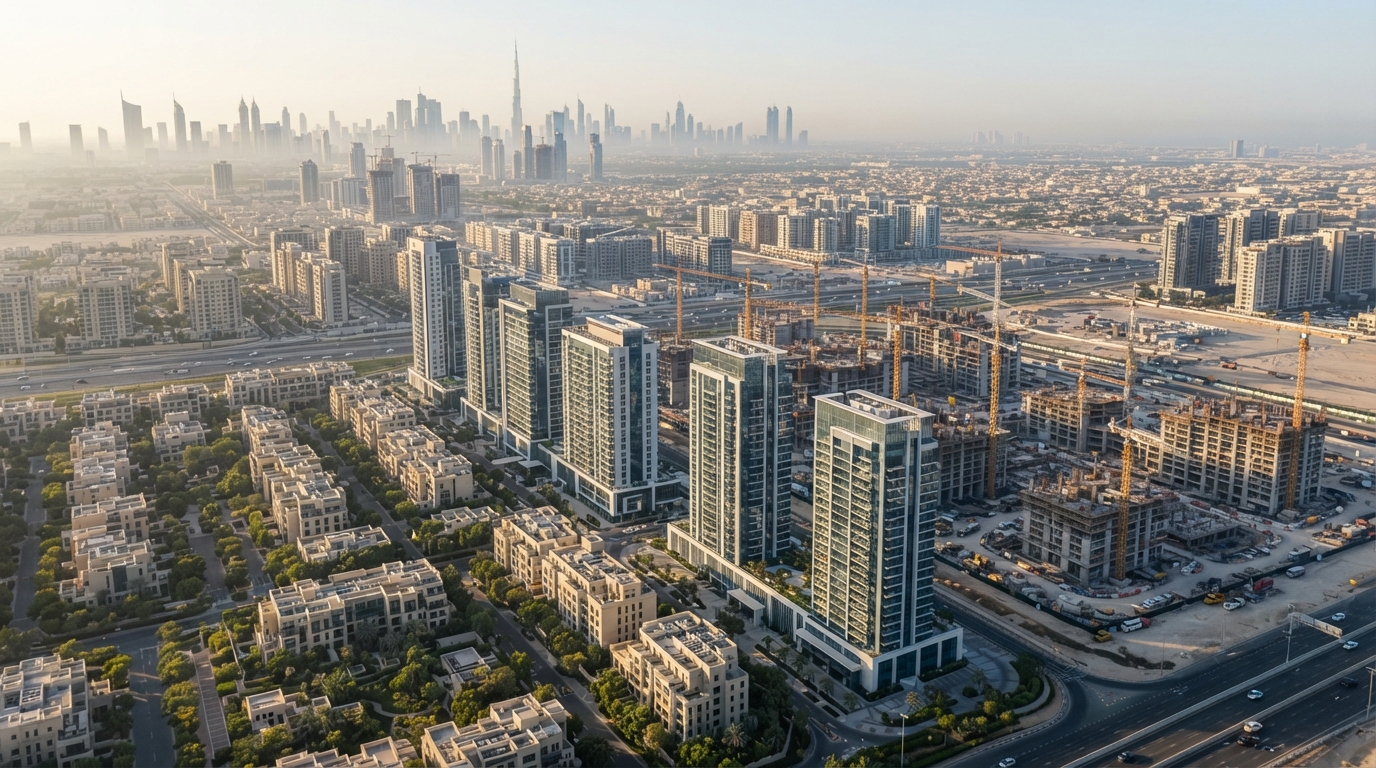
Dubai’s property market is not a straight line upward. Understanding its cycle history is the foundation of every sound investment decision. When assessing the risks of buying property in Dubai, market volatility usually tops the list for most financial advisors, as the city experiences rapid boom-and-bust cycles driven by global economic trends, oil prices, and expatriate population shifts.
Knowing where the market sits within its current cycle separates investors who build wealth from those who buy at the wrong moment and spend years recovering paper losses.
Historical Price Cycles
Dubai’s property market has completed three distinct cycles since 2002. Prices surged aggressively between 2012 and 2014, then corrected gradually through 2019 as oversupply and global uncertainty weighed on demand. The market recovered sharply from 2021, driven by post-pandemic migration and visa reforms.
For Australian investors entering now, the primary cycle risk is purchasing in communities that have already captured most of their appreciation. Emerging corridors like Dubai South carry more upside but also more timing uncertainty.
Oversupply in Segments
Not every property in Dubai faces the same supply dynamics. Certain apartment-heavy mid-market districts face temporary downward pressure on rents and capital values when too many similar units are delivered simultaneously.
Roughly 31.2% of total deliveries through 2028 concentrate in just five zones, with JVC facing the highest supply pressure at approximately 11,800 units in 2026, and Dubai South is identified as a fast-growing hub with heavy supply concentration. Knowing the pipeline before you purchase is non-negotiable. A community delivering strong yields today may face 12 to 24 months of rental pressure if a wave of similar units arrives simultaneously.
Impact of Global Events
Global economic shocks affect Dubai’s property market through two primary channels. First, they reduce the expatriate population as companies downsize or relocate staff, which reduces rental demand and occupancy rates. Second, they redirect international capital away from real estate toward safe-haven assets, reducing transaction volumes and price support.
The UAE follows a diplomacy-driven and diversified economic model, with Dubai supported by trade, tourism, finance, logistics, and technology rather than a single industry, which provides meaningful resilience compared to single-commodity economies during periods of global instability. That diversification is genuine protection, though it does not eliminate cycle risk entirely.
Furthermore, the risks of buying property in Dubai related to global events are most acute for short-term investors. A 5 to 7 year holding horizon smooths through most external shocks and captures the recovery that has historically followed every Dubai correction.
Australian Tax and Compliance Risk

This is the most misunderstood risk among Australian investors entering the property market in Dubai. The zero-tax narrative is partially accurate but incomplete in a way that creates real financial exposure if not addressed before purchase.
ATO Reporting Obligations
The zero tax rule applies on the UAE side only. Dubai charges zero personal income tax on rental earnings. However, Australian tax residents must declare global income to the ATO, including overseas property gains. Proper structuring before purchase is crucial.
The upside is that legitimate deductions apply. Australian landlords can minimize tax drag through depreciation on furniture packages under Division 40, building write-off under Division 43 based on RERA completion certificate, property management fees, service charges, and master-community levies. These deductions partially offset the income tax liability.
Speak with a tax advisor familiar with both the ATO framework and UAE property before purchasing. The Australian Taxation Office publishes specific guidance on foreign rental income obligations.
Capital Gains Tax Exposure
When you sell your property in Dubai, Australian capital gains tax may apply depending on your residency status and holding period. Properties held for more than 12 months qualify for the 50% CGT discount for Australian tax residents.
The structure you use to hold the property affects your CGT position. Holding personally, through a company, a trust, or an SMSF each carries different CGT outcomes under Australian law. Ownership structure through a UAE free-zone company can assist Golden Visa eligibility and estate planning, but watch Australian Controlled Foreign Company rules, which can create unexpected Australian tax liabilities for corporate structures.
Get the ownership structure right before signing. Restructuring after purchase is expensive and sometimes impossible without triggering a disposal event.
SMSF Compliance Complexity
Buying Dubai property through a Self-Managed Super Fund is possible but carries specific compliance requirements under ATO regulations and your fund’s trust deed provisions. Not every SMSF structure permits overseas property investment in Dubai.
Speak with an SMSF-specialist accountant before attending any expo or signing any reservation. Committing a deposit before confirming compliance creates unnecessary complications. If your fund qualifies, Dubai property can be a legitimate yield-generating asset within a compliant super structure.
Australian investors buying property in Dubai in 2026 are often told that Dubai is overseas, so how would the ATO even know? In practice, the ATO’s visibility into offshore income has improved dramatically over the last decade through global reporting systems, transaction monitoring, and data matching.
Off-Plan and Developer Risk

Off-plan properties dominate Dubai’s market because they offer lower entry prices and flexible payment plans. They also concentrate the sharpest risks of buying property in Dubai into a single category. Understanding these risks before committing protects your capital during the construction period.
Construction Delays
Off-plan projects’ property in Dubai is sometimes handed over later than contracted timelines. Supply chain disruptions, labour shortages, and financing complications at the developer level all contribute to delays that can extend from months to years in severe cases.
The risk management tool here is developer track record verification. Emaar, DAMAC, Binghatti, Imtiaz, Ellington, and Omniyat all maintain documented completion histories that you can verify independently. Thoroughly check the developer’s track record, understand the Sales Purchase Agreement clauses, and verify project registration with the property in the Dubai Land Department before committing any funds.
Avoid developers launching their first or second project without a completed delivery record. The savings on entry price rarely compensate for the execution risk that first-time developers carry.
RERA Escrow Protection
The most important financial safeguard against developer risk is RERA’s mandatory escrow system. Every off-plan developer in Dubai must deposit all buyer funds into a regulated escrow account. Independent engineers verify each construction milestone before any funds are released to the developer.
Verify the escrow account number independently through the Dubai Land Department’s official registry before transferring any funds. This verification step takes minutes and eliminates the primary financial exposure of off-plan purchasing.
If a developer faces insolvency during construction, RERA intervenes to reassign the project, arrange refunds from the escrow account, or facilitate an alternative resolution. Your capital remains protected even in the worst-case scenario when properly verified escrow arrangements are in place.
Exit and Resale Liquidity
Speculative buyers looking to flip off-plan contracts often face tighter resale markets during a project’s completion phase, particularly in communities where similar units from competing projects are simultaneously approaching handover.
Resale liquidity varies significantly by community. JVC recorded over 18,000 transactions in 2025, meaning a well-priced unit can find a buyer within days. Less active communities may take months to exit, even when priced correctly.
The risks of buying property in Dubai in the off-plan segment are real but manageable. Investors who conduct proper due diligence on developers before signing consistently experience better outcomes than those who rely on marketing presentations alone.
Financial and Currency Risks of Buying Property

The risks of buying property in Dubai extend beyond the property itself into the financial mechanics of cross-border investment. Currency exposure and hidden costs are the two financial risks that most frequently surprise first-time Australian buyers.
Currency Exposure Management
The AED is pegged to the USD at a fixed rate of 3.67. This peg provides stability against the dollar but means that your effective return in Australian dollars depends entirely on the AUD to USD exchange rate at the time of each conversion.
A weakened AUD makes property in Dubai purchases, staged payment installments, and mortgage repayments more expensive in your home currency. Mitigation includes using forward contracts or staging your currency conversions to lock in favourable exchange rates rather than converting lump sums during market lows.
The currency risk cuts both ways. A weakening AUD increases your property in Dubai asset values and rental income when converted back to Australian dollars. Many Australian investors have benefited from exactly this dynamic during periods of AUD weakness against the USD.
Hidden Transaction Costs
The Dubai Land Department registration fee of 4% is widely understood. What surprises buyers are the additional costs that accumulate around the primary transaction.
The table below shows the complete cost structure for Australian buyers in 2026:
| Cost Item | Amount | Notes |
| DLD Registration Fee | 4% of property value | Mandatory, all transactions |
| Agency Commission | 2% of property value | Standard market rate |
| Trustee and Admin Fees | AED 4,000 to AED 6,000 | Per transaction |
| Oqood Registration | AED 3,000 to AED 5,000 | Off-plan only |
| POA Attestation (Australia) | AUD 800 to AUD 2,500 | If purchasing remotely |
| Annual Service Charges | AED 10 to AED 40 per sq ft | Ongoing, varies by community |
| Property Management | 5% to 10% of annual rent | If using a management company |
Total upfront acquisition costs typically run 6% to 7% above the purchase price. Factor these into your yield calculations before committing. A property generating 8% gross yield nets approximately 6% to 6.5% after service charges and management fees, which still significantly outperforms Sydney’s 3.1% gross before Australian income tax.
Service Charge Variability
Annual service charges vary dramatically between buildings within the same community. Two adjacent towers can carry service charges differing by AED 15 per square foot annually. On a 700 square foot apartment, that difference is AED 10,500 per year, equal to approximately 1.5% of yield on an AED 700,000 property in Dubai.
Always request the RERA-registered service charge figure for the specific building before signing. Do not rely on community averages or developer estimates. The actual registered figure is available through the Dubai Land Department and determines your real net yield.
Risk Comparison by Investor Profile
Different Australian investors face different risk profiles depending on their goals, timelines, and capital amounts. This table maps the key risks of buying property in Dubai against each investor type:
| Investor Type | Primary Risk | Severity | Best Mitigation |
| First-time overseas buyer | Developer credibility | High | Tier-1 developers only |
| Yield-focused income investor | Service charge variability | Medium | Verify the RERA-registered figure pre-purchase |
| Off-plan capital growth buyer | Construction delays | Medium | Track record verification |
| SMSF investor | ATO compliance | High | SMSF-specialist accountant pre-purchase |
| High-income earner | ATO marginal tax rate | High | Deduction structuring with a tax advisor |
| Short-term flip investor | Resale liquidity | High | High-volume communities only |
Understanding which row applies to your situation focuses your due diligence on the risks that matter most to your specific investment structure.
Manage the Risks and Invest With Confidence
The risks of buying property in Dubai are real, identifiable, and manageable. Every risk covered in this guide has a documented mitigation strategy that experienced investors apply as standard practice before committing capital.
Market cycle risk responds to community selection and holding horizon. ATO risk responds to pre-purchase tax structuring and honest accounting. Developer risk responds to track record verification and RERA escrow confirmation. Currency risk responds to staged conversions and longer holding periods. Hidden cost risk responds to transparent fee modelling before the purchase commitment.
Schedule your free consultation at Bright Realty International and invest in property in Dubai with your eyes fully open.
Frequently Asked Questions
What are the biggest risks of buying property in Dubai for Australians?
The main risks include currency fluctuations, off-plan construction delays, oversupply in some areas, ATO tax obligations, and hidden ownership costs. Most of these risks can be reduced through proper research, verified developers, and professional tax advice.
Do Australians pay tax on Dubai property income?
Dubai charges no tax on rental income, but Australians must declare overseas rental earnings and capital gains to the ATO. Deductions such as management fees, depreciation, and maintenance costs may reduce taxable income. Consulting a tax advisor before investing is recommended.
How does the RERA escrow system protect my money?
RERA requires all off-plan buyer funds to be held in regulated escrow accounts. Developers only receive funds after verified construction milestones are completed. This system provides significant protection for investor capital throughout the development process.
Is the Dubai property market at risk of crashing in 2026?
Property in Dubai remains supported by strong economic growth, tourism, trade, and foreign investment. While some areas may face supply pressure, a market-wide crash is considered unlikely by most analysts. Community selection remains the most important factor for investors.
What hidden costs should Australians budget for when buying property in Dubai?
Investors should budget for the 4% DLD registration fee, agency commissions, administrative charges, service charges, and property management fees. Total acquisition costs generally add 6% to 7% above the purchase price. Understanding these costs helps create a more accurate return projection