





Quick Answer
- Short-term rental investment in Dubai delivers gross yields of 8–12% in prime areas.
- Every holiday home requires a DET licence; fines start at AED 5,000 for unlicensed listings.
- A well-managed 1-bedroom in Dubai Marina earns AED 110,000–140,000 annually on short-term platforms vs AED 80,000–95,000 on long-term leasing.
- Dubai welcomed 19.59 million international overnight visitors in 2025, driving consistent rental demand.
- Professional management companies charge 15–25% of gross income and handle all operations remotely.
Short-term rental investment in Dubai delivers 30–50% more gross revenue than traditional long-term leasing in the same property — and it operates inside a fully regulated, investor-friendly legal framework. Dubai’s government framework actively encourages legal holiday homes, making it a credible and scalable alternative to annual tenancy contracts. For investors who understand the operational model, the returns are compelling and repeatable.
The challenge is that most first-time investors confuse gross yield with net yield, underestimate operating costs, and enter the market without a clear licensing or management strategy. An unlicensed short-term rental in Dubai carries fines from AED 5,000 upward — and platforms remove non-compliant listings without warning. This guide closes every knowledge gap before it becomes expensive.
You will learn exactly how short-term rental investment in Dubai works in 2026, which areas deliver the strongest ROI, what the DET licensing process requires, how to calculate realistic net yields, and how to manage your property profitably from anywhere in the world.
What Is Short-Term Rental Investment?
Defining Holiday Homes
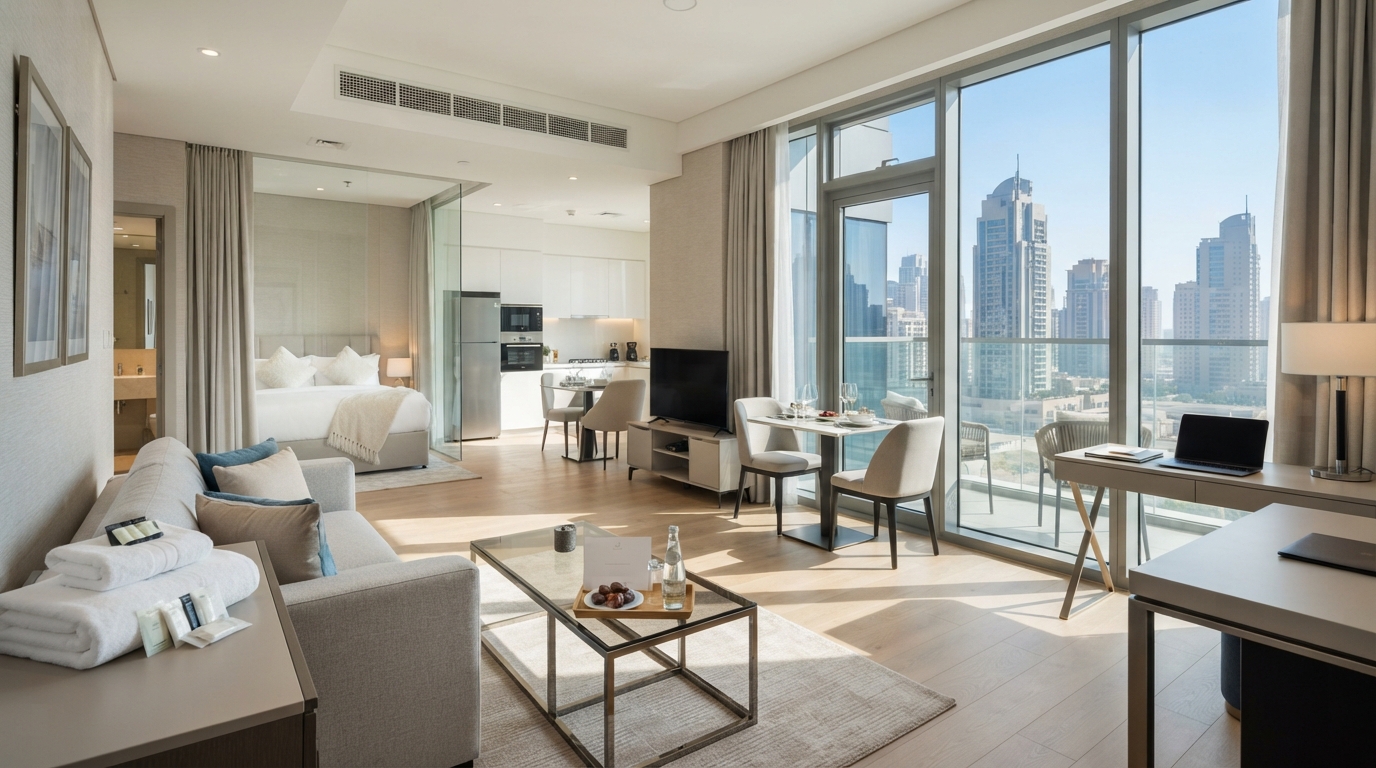
Short-term rental investment in Dubai refers to fully furnished residential properties leased for stays ranging from a single night to several months. The Dubai Land Department classifies these as holiday homes, regulated by the Department of Economy and Tourism (DET).
- Properties must be fully furnished and guest-ready from day one
- Stays range from one night to several months
- All utilities, housekeeping, and amenities are typically included
- Minimum stay requirements vary by platform and season
- Luxury units command significantly higher daily rates than standard apartments
Short-term rental investment fundamentally changes the income model from fixed annual rent to dynamic nightly pricing — and that shift is where the yield premium comes from.
Who Stays in Your Property?
Understanding your guest profile is the foundation of a successful short-term rental investment strategy. Dubai attracts three primary guest types, each with distinct needs.
- Remote workers: 2–8 week stays, need fast internet and desk setup
- Business visitors: 1–4 week stays, prefer proximity to DIFC and Business Bay
- Tourists and holidaymakers: 3–10 night stays, value walkability and views
- Families: prefer 2–3 bedroom units with kitchen and washing facilities
- Event visitors: GITEX, Dubai Shopping Festival, Art Dubai drive premium seasonal demand
Knowing which guest type your property attracts determines how you furnish it, how you price it, and which platforms you prioritize for listings.
Seasonality and Demand Cycles
Short-term figures assume an average occupancy rate of 75% across the year — higher in winter, lower in summer. Peak season runs October to March, driven by tourism, international events, and the city’s cooler climate. Summer months see reduced tourist arrivals but remain viable through long-stay discounts and remote worker targeting.
Major events — GITEX Global, Dubai Shopping Festival, Art Dubai, Formula E — directly spike nightly rates to premium levels. Smart investors price dynamically around these events rather than applying flat annual rates.
Seasonality is a manageable variable, not a dealbreaker. It reinforces the importance of understanding your specific area’s demand profile before committing to a short-term rental investment strategy.
Legal Framework and DET Licensing

DET Licence Requirements
Every short-term rental investment property in Dubai requires a holiday home permit issued by the Department of Economy and Tourism before hosting any guests. Operating without a licence carries fines starting at AED 5,000 and forced removal from listing platforms.
For a comprehensive guide to buying property in Dubai before entering the short-term rental market, review the full acquisition process first.
- Valid passport copy and property title deed
- No Objection Certificate from landlord (if leased, not owned)
- Property floor plan and photographs
- Safety compliance confirmation
- DET portal account registration
Completing your DET licence before listing on any platform is the single non-negotiable first step — without it, your entire income strategy is legally exposed from day one.
Compliance Obligations
Beyond the initial licence, ongoing compliance governs your short-term rental investment operation. Licensed properties must display a QR code at the entrance. Owners are limited to eight properties under a single licence; exceeding this requires a commercial trade licence.
- Tourism Dirham: AED 7–20 per bedroom per night (collected from guests)
- VAT on management services: 5%
- Annual licence renewal: mandatory
- QR code display: mandatory at property entrance
- Community rules: noise, parking, and occupancy limits apply
Staying current with compliance obligations protects your licence, avoids fines, and keeps your listings active on all major booking platforms year-round.
Short-Term vs Long-Term Legal Differences
Short-term rental investment operates under DET regulation while long-term leases fall under RERA and the Ejari system. The two frameworks are distinct and cannot overlap — a property registered on Ejari for a 12-month tenancy cannot simultaneously operate as a holiday home.
Holiday homes can generate up to 40–50% higher yields than traditional apartments, but that extra return comes with more moving parts — strong management, accurate pricing, and consistent occupancy are all critical.
Understanding the legal distinction upfront prevents costly compliance mistakes. Both rental strategies deliver strong returns in Dubai — the right choice depends on your property type, location, and management capacity. For a detailed comparison, review our guide on freehold vs leasehold areas in Dubai to confirm your ownership structure before selecting your rental strategy.
DET Licensing Costs and Requirements (2026)
| Item | Cost / Requirement | Frequency |
| DET Holiday Home Permit | AED 1,520 | Annual |
| Tourism Dirham Fee | AED 7–20 per bedroom/night | Per guest stay |
| VAT on management services | 5% | Per invoice |
| Maximum properties per licence | 8 properties | Per individual licence |
| Commercial trade licence (9+ properties) | Required | One-time setup |
| Property inspection | Safety compliance check | At initial registration |
| QR code display | Mandatory at entrance | Ongoing |
Obtaining the required DET licence is essential before operating a short-term rental in Dubai. Understanding these licensing costs and compliance requirements helps investors budget accurately and avoid regulatory issues as they grow their rental business.
Best Areas for Short-Term Rental ROI
Prime Waterfront Zones
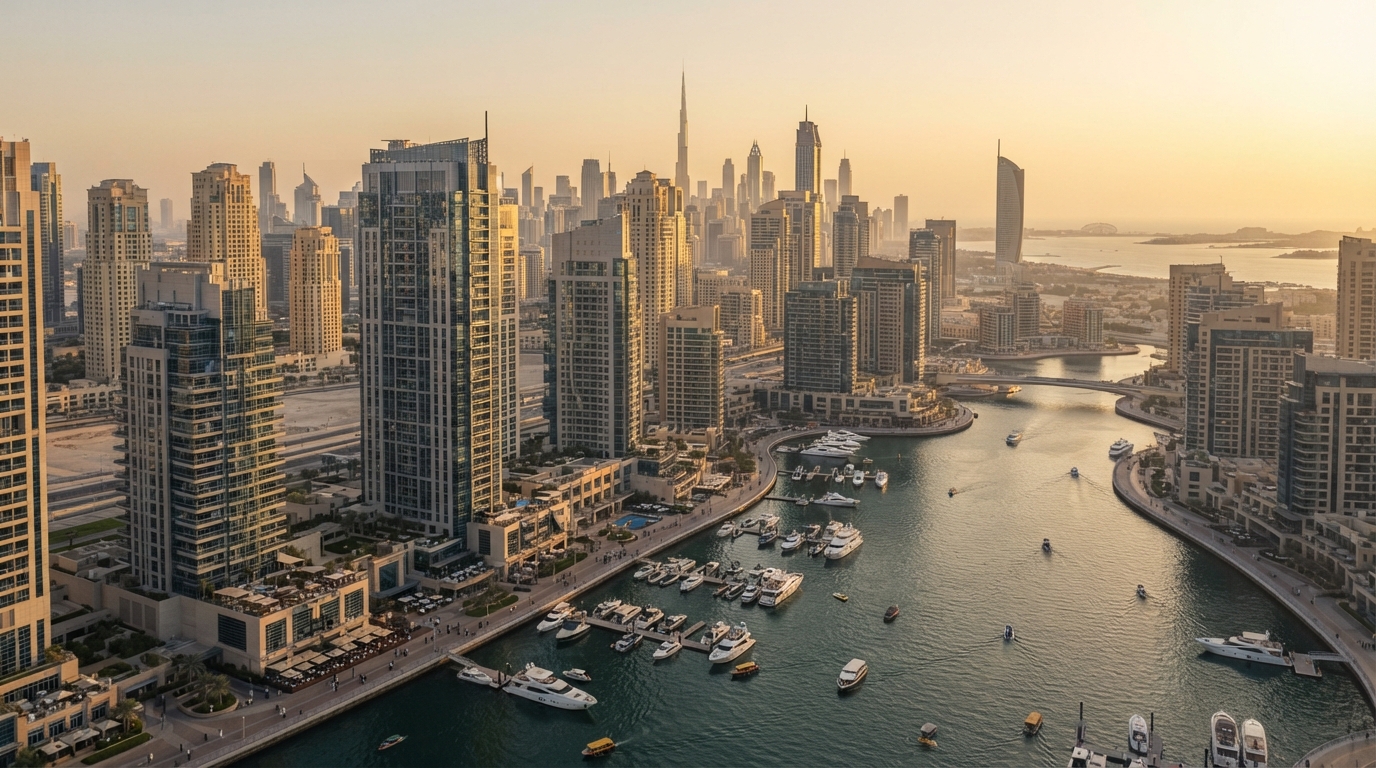
The top five areas for short-term rental investment in 2026 are Dubai Marina, Downtown Dubai, Palm Jumeirah, JBR, and Business Bay. These locations combine high tourist footfall, walkability, premium amenities, and strong year-round occupancy.
Explore our complete breakdown of the best areas to buy property in Dubai to identify which zone aligns with your investment budget.
- Dubai Marina: AED 350–550 per night, 75–85% occupancy, 3,000+ active listings
- Downtown Dubai: AED 500–900 per night, Burj view commands 20–30% premium
- Palm Jumeirah: ultra-luxury, AED 800–2,500+ per night for villas
- JBR: beach access, family segment, AED 400–650 per night
- Business Bay: business traveller focus, competitive rates, strong weekday demand
Prime waterfront zones consistently outperform peripheral areas on occupancy rates, nightly rates, and overall annual income — location remains the single most important variable in short-term rental investment.
Mid-Market High-Yield Areas
Mid-market communities deliver strong short-term rental investment yields at lower entry prices. Jumeirah Village Circle (JVC) leads with gross yields of 8.5–9.5%. Arjan benefits from proximity to Miracle Garden, making it popular for short stays. Dubai Silicon Oasis attracts tech professionals on extended remote work assignments.
According to Knight Frank UAE research, mid-market areas with deep tenant and guest demand pools consistently outperform prime zones on net yield after all costs are deducted.
- JVC: 8.5–9.5% gross yield, AED 450K+ entry, 7–9% net after costs
- Arjan: 8–9% gross yield, proximity to tourist attractions boosts STR occupancy
- Dubai Silicon Oasis: 7.5–9% gross yield, tech hub, remote worker demand
- Dubai South: AED 400K+ entry, strong growth from Al Maktoum International expansion
- DAMAC Hills 2: affordable entry, family-oriented, 7–8% gross yield
Mid-market areas deliver the strongest risk-adjusted net yields for short-term rental investment when combined with professional management and dynamic pricing strategies.
Emerging Investment Zones
Emerging zones offer early-mover advantages for short-term rental investment in Dubai. Infrastructure completion drives occupancy growth as communities mature. Prices remain reasonable relative to income potential, creating entry opportunities before competition intensifies.
Yields in Dubai can swing materially even within the same community — service charges, vacancy speed, and building quality are the biggest differentiators in 2026.
- Dubai Creek Harbour: infrastructure maturing, waterfront appeal growing
- Expo City Dubai: event-driven demand, convention traffic year-round
- Dubai Islands: five-island development, premium coastal STR potential
- Sobha Hartland: master-planned, family segment, amenity-rich
- Meydan City: racecourse events drive seasonal premium demand
Emerging zones require more patience before occupancy rates stabilize, but investors who enter early capture appreciation alongside rental income. For a full view of off-plan opportunities entering the short-term rental market, explore our off-plan properties Dubai listings.
Short-Term Rental ROI by Area (2026)
| Area | Avg. Daily Rate (AED) | Occupancy Rate | Gross Yield | Best Guest Profile |
| Dubai Marina | 350–550 | 75–85% | 8.5–12% | Tourists, remote workers |
| Downtown Dubai | 500–900 | 70–80% | 8–11% | Luxury tourists, event visitors |
| Palm Jumeirah | 800–2,500+ | 65–75% | 6–10% | Ultra-luxury, family stays |
| JBR | 400–650 | 72–80% | 8–10% | Beach tourists, families |
| Business Bay | 350–500 | 68–78% | 7.5–9.5% | Business travelers |
| JVC | 200–350 | 65–75% | 8.5–9.5% | Budget travelers, remote workers |
| Arjan | 180–320 | 60–72% | 8–9% | Tourists, short-stay families |
Location plays a major role in short-term rental performance across Dubai. Comparing daily rates, occupancy, and yields helps investors identify the communities that offer the strongest balance of income potential and guest demand.
Calculating Realistic Net Yields

Gross vs Net Yield
Holiday homes in Dubai generate gross ROI of 10–15%, with net returns typically between 6–9% after costs. The gap between gross and net is where most first-time investors get their expectations wrong. Understanding every cost line before you invest protects your return projections.
The primary cost deductions from gross revenue are professional management fees (15–25% of gross income), furnishing and setup costs (one-time AED 30,000–80,000 for a 1-bedroom), service charges (AED 10–40 per sq ft annually), utility bills, DET licensing, Tourism Dirham, and maintenance reserves.
- Professional management: 15–25% of gross income
- Furnishing and setup: AED 30,000–80,000 (one-time, 1-bedroom)
- Service charges: AED 10–40 per sq ft per year
- Utilities (electricity, water, internet): AED 8,000–18,000 per year
- DET Holiday Home Permit: AED 1,520 per year
- Maintenance reserve: 2–5% of gross income
- Void periods: budget 10–15% vacancy conservatively
Always calculate net yield — not gross — before committing to a short-term rental investment property. The gross number looks attractive; the net number tells you whether the deal actually works.
Occupancy Rate Reality
Holiday homes need 65–75% booking rates to match a decent long-term yield. Properties below this threshold often perform worse than a standard 12-month tenancy on net yield. Above 75% occupancy with dynamic pricing, short-term rental investment consistently outperforms.
A well-located, professionally managed 1-bedroom in Dubai Marina at 75% occupancy and AED 450 average daily rate generates approximately AED 123,000 gross annually. After a 20% management fee, service charges, utilities, and licensing, net income lands at approximately AED 85,000–95,000. A comparable long-term lease yields AED 80,000–95,000 gross with far lower operating costs.
What we have consistently observed with investors entering the short-term rental investment space is that occupancy rate is the most critical variable — and it is entirely determined by pricing strategy, presentation quality, and platform management.
Risk Factors and Exit Strategy
Every short-term rental investment carries risk. Market saturation grows as more investors enter the same community. Regulatory changes — new tourism taxes, licensing restrictions, occupancy limits — can alter economics with limited notice. Seasonal demand drops require proactive management rather than panic pricing.
- Market saturation: monitor new supply in your specific building and community
- Regulatory shifts: stay current with DET announcements and compliance updates
- Demand drops: maintain a 3-month emergency fund as operating reserve
- Exit strategy: long-term conversion is always available as a fallback
- Platform dependency: list across Airbnb, Booking.com, and direct channels to diversify
For a full picture of your rights and exit options as a property owner, review our guide on buying property in Dubai pros and cons before committing.
Short-Term vs Long-Term Rental Comparison (2026)
| Factor | Short-Term Rental | Long-Term Rental |
| Gross Yield | 8–12% | 6–9% |
| Net Yield (after costs) | 6–9% | 5–7% |
| Income Stability | Variable, seasonal | Predictable, annual |
| Management Intensity | High (daily operations) | Low (annual contract) |
| DET Licence Required | Yes (AED 1,520/year) | No |
| Ejari Registration | Not required | Mandatory (AED 195) |
| Vacancy Risk | 15–25% seasonally | 5–10% between tenants |
| Personal Use | Flexible (block dates) | Not permitted during tenancy |
| Best For | Active investors, prime areas | Overseas, passive landlords |
Both rental strategies can deliver attractive returns, but the right choice depends on your investment goals and level of involvement. Evaluating income potential, operating costs, and management requirements will help you select the approach that best matches your long-term objectives.
Getting Started: Step-by-Step Process
Property Selection
Securing the right property is the most important decision in short-term rental investment. Location determines occupancy; building quality determines nightly rate; unit type determines your guest profile. Focus on freehold zones in established tourist corridors.
- Choose areas with proven short-term rental demand (Marina, Downtown, JBR, Palm)
- Prioritize buildings that permit holiday homes (confirm with building management)
- Target 1–2 bedroom units (widest guest appeal and fastest occupancy)
- Verify service charges are reasonable (high charges destroy net yield)
- Confirm proximity to metro, dining, and attractions (directly impacts occupancy)
Choosing the wrong property in the right area underperforms less than choosing the right property in the wrong area — both matter, but location is the harder variable to fix.
Licensing and Setup
Once your property is secured, register on the DET Holiday Homes portal and submit all required documentation. Complete a professional furnishing fit-out that meets DET standards — quality furniture, fully equipped kitchen, smart TV, fast internet, and premium linens are baseline expectations for positive guest reviews.
- DET registration: submit documents, pay AED 1,520, receive licence in 10–14 days
- Professional furnishing: AED 30,000–80,000 for a 1-bedroom (one-time investment)
- Photography: professional listing photos are non-negotiable for competitive positioning
- Safety compliance: smoke detectors, fire extinguisher, first aid kit mandatory
- Platform setup: list on Airbnb, Booking.com, and Vrbo simultaneously
According to Engel & Völkers Dubai market data, fully furnished units earn 10–25% more in annual income than comparable unfurnished properties. Invest in furnishing quality upfront — it directly determines your nightly rate ceiling and review score. For additional context on how your Dubai investment property fits into a broader portfolio strategy, review our full investment guide.
Management Strategy
Choose your management approach before your first guest checks in. Professional management companies charge 15–25% of gross income but handle all bookings, guest communication, check-ins, housekeeping, maintenance, and dynamic pricing.
Self-management reduces costs but requires constant availability. For overseas investors or those seeking a passive income model, professional management is the only viable path. After helping hundreds of investors enter the short-term rental investment market, we’ve consistently seen that professional management recovers its fee through higher occupancy rates and better review scores within the first six months.
Short-Term Rental Operating Costs Breakdown
| Cost Category | Annual Estimate (1BR) | % of Gross Revenue |
| Professional management (20%) | AED 20,000–30,000 | 20% |
| Utilities (electricity, water, internet) | AED 8,000–18,000 | 8–12% |
| Service charges | AED 10,000–25,000 | 8–15% |
| DET licence + Tourism Dirham | AED 5,000–12,000 | 4–8% |
| Furnishing maintenance and replacement | AED 3,000–8,000 | 2–5% |
| Void period allowance (15%) | AED 15,000–20,000 | 15% |
| Total operating costs | AED 61,000–113,000 | ~40–55% of gross |
Short-term rentals can generate higher revenue, but they also involve significantly greater operating expenses. Understanding these ongoing costs helps investors estimate realistic profits and choose the management model that best fits their investment strategy.
Ready to Start Your Dubai Rental Investment?
Short-term rental investment in Dubai delivers 6–9% net yields with zero UAE personal income tax, inside a fully regulated holiday home framework that protects landlords and guests equally.
With the right property, DET licence, and professional management partner, your Dubai holiday home operates as a high-performing passive income asset from anywhere in the world.
Contact Bright Realty International to explore 100+ curated short-term rental investment properties across Dubai’s prime zones and get started today.
FAQs
Do I Need a Licence for Short-Term Rentals in Dubai?
Yes. Every short-term rental investment property in Dubai must hold a valid holiday home permit issued by the Department of Economy and Tourism before hosting any guests. Fines for unlicensed operations start at AED 5,000, and platforms actively remove non-compliant listings. The annual permit costs AED 1,520 and renews yearly through the DET portal.
What Returns Can I Expect From Short-Term Rentals in 2026?
Holiday homes in Dubai generate gross ROI of 10–15%, with net returns typically between 6–9% after costs including management fees, utilities, service charges, and void periods. Prime areas like Dubai Marina and Downtown Dubai consistently outperform mid-market zones on both gross and net yield.
What Are the Best Areas for Short-Term Rental Investment?
Dubai Marina, Downtown Dubai, Palm Jumeirah, JBR, and Business Bay consistently deliver the strongest short-term rental investment performance in 2026. JVC and Arjan offer higher gross yields at lower entry prices. Location, building quality, and proximity to tourist attractions are the three most critical factors for occupancy performance.
Can I Manage a Dubai Holiday Home From Overseas?
Yes. Professional holiday home management companies handle all bookings, guest communication, housekeeping, maintenance, and dynamic pricing for 15–25% of gross income. The Dubai Land Department’s Dubai REST app allows remote owners to monitor their property’s registration status and tenancy history digitally.
Is Short-Term Rental Investment Better Than Long-Term in Dubai?
It depends on your property and management capacity. In high-demand areas, short-term rentals generate 20–40% more gross revenue than annual leasing, but the net advantage after full costs is typically 1–3 percentage points above long-term leasing. Prime locations with professional management consistently favour short-term. Suburban or family communities often perform better on long-term leasing. Explore our guide on Dubai investment properties to compare both strategies.