



Quick Answer
- Dubai property carries real risks — off-plan delays, oversupply, hidden costs, and legal traps.
- Over 100,000 new units enter the market in 2026, creating oversupply risk in affordable zones.
- Service charges range from AED 10 to AED 80 per sq ft annually and crush net yields silently.
- Only freehold zones allow foreign ownership — buying outside these areas voids your legal protection.
- Every risk here is manageable with verified developers, DLD-registered agents, and proper due diligence.
The risks of buying property in Dubai are real and knowing them upfront separates investors who profit from those who get burned. Dubai’s market has delivered exceptional returns since 2020, but following several years of exceptional growth, the market entered a more balanced phase during 2026, with transaction activity moderating and buyers becoming more selective. That shift makes due diligence more important than ever before.
Most investors who encounter problems in Dubai do not fail because the market is bad. They fail because they did not verify developer escrow accounts, ignored service charge projections, or bought in zones with excess new supply. Every one of those mistakes is avoidable with the right preparation.
This guide maps every major risk of buying property in Dubai in 2026 off-plan delays, hidden costs, legal traps, oversupply, and liquidity risk. More importantly, it shows you exactly how to mitigate each one before you commit a single dirham.
Off-Plan Property Risks
Developer Delay Risk
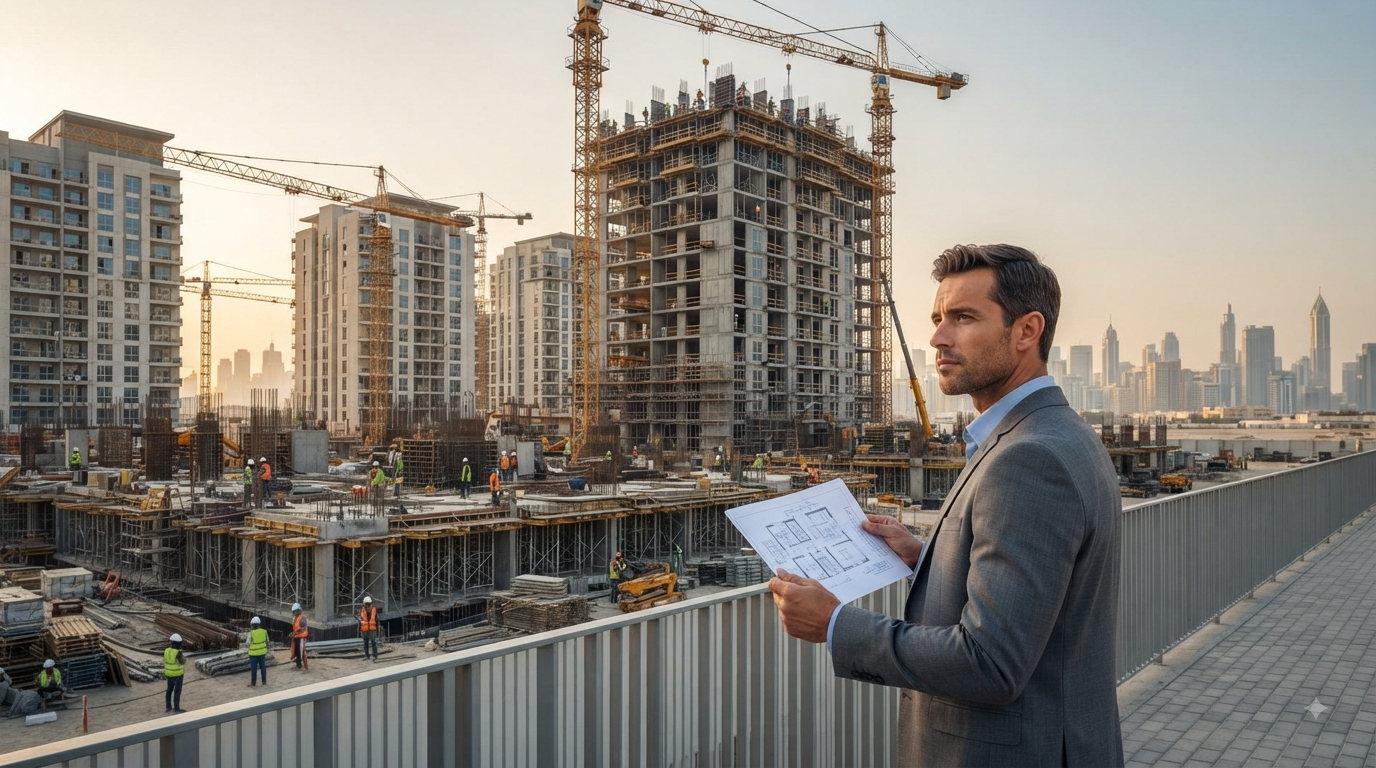
Off-plan property in Dubai offers attractive entry prices and developer payment plans — but delivery delays remain the most common risk foreign buyers encounter. Developers sometimes miss handover dates by 6–24 months, leaving investors without rental income and still paying installments.
- Verify the developer’s DLD escrow account registration before payment
- Check the developer’s track record — completed projects versus promised timelines
- Read the compensation clause for late delivery in the Sales Purchase Agreement
- Monitor construction progress via the official DLD application
- Confirm RERA developer registration status at dubailand.gov.ae
An escrow-registered developer is not a guarantee of on-time delivery, but an unregistered one is a guarantee of zero legal protection when delays occur.
Contract Clause Risks
Off-plan Sales Purchase Agreements (SPAs) in Dubai contain developer-favorable clauses that buyers frequently overlook. Late delivery compensation clauses sometimes cap developer liability at far below actual investor losses. Force majeure definitions can extend timelines indefinitely.
- Review late delivery penalty and compensation provisions carefully
- Confirm force majeure clauses do not allow indefinite extensions
- Check refund conditions if the project is cancelled or substantially altered
- Verify payment milestone linkage to actual construction progress
- Engage a RERA-registered property lawyer for SPA review before signing
Reading your SPA before signing is not optional — it is the moment when your legal protections are either established or permanently forfeited.
Project Cancellation Risk
A small number of Dubai off-plan projects do not complete. Developer insolvency, planning changes, or funding failures occasionally result in cancellation. When this happens without escrow protection, buyers face enormous difficulty recovering funds.
RERA operates a cancelled projects list. Buyers of cancelled projects with properly registered escrow accounts receive refunds through the DLD’s escrow release process. Buyers without escrow protection typically enter lengthy legal proceedings. For a full comparison of off-plan versus ready property risks and benefits, explore our guide on buying property in Dubai.
Off-plan risk is manageable, not prohibitive. Buyers who verify escrow accounts, check developer track records, and review contracts carefully consistently avoid the problems that make headlines. Most importantly, the risk profile of established developers like Emaar, DAMAC, and Ellington is significantly lower than that of smaller, less-capitalized firms.
Hidden Costs and Financial Risks

Service Charge Burden
Service charges in Dubai range from AED 10 to AED 80 per square foot annually, with iconic buildings like the Burj Khalifa charging up to AED 72 per square foot. A 1,000 sq ft apartment in a premium building carries AED 72,000 in annual service charges — before mortgage payments, management fees, or maintenance.
This single cost line destroys the net yield projections of investors who calculate only gross rental income. A 9% gross yield in JVC can drop to 6% net after AED 14 per sq ft service charges. A 6% gross yield in a Downtown Dubai luxury building can drop to 3% net after AED 45 per sq ft service charges.
- Verify the Annual Service Charge Rate before committing to any property
- Request the RERA Service Charge Index for the specific building
- JVC: approximately AED 12–18 per sq ft (lower burden)
- Dubai Marina: approximately AED 20–35 per sq ft (moderate)
- Downtown Dubai: approximately AED 30–72 per sq ft (significant burden)
- Always calculate net yield after service charges, not before
Never evaluate a Dubai property investment on gross yield alone. Net yield after service charges is the only number that reflects your actual income.
Upfront Transaction Costs
The risks of buying property in Dubai include a significant upfront cost burden that catches first-time buyers unprepared. Total transaction costs typically run 7–8% of the purchase price on top of the property value.
- Dubai Land Department (DLD) transfer fee: 4% of property value
- Real estate agent commission: 2% of property value
- Mortgage registration fee: 0.25% of loan amount (if mortgaged)
- Property valuation fee: AED 2,500–3,500
- DLD admin fee: AED 580 (ready property) or AED 40 (off-plan)
- Trustee office fees: AED 4,000–4,200
On a AED 2 million apartment, these costs total approximately AED 140,000–160,000 before you receive a key. Buyers who budget only for the property price routinely face a liquidity shortfall at the DLD transfer stage. For a complete cost breakdown, review our detailed guide on Dubai investment property.
Budget 7–8% above your property price for closing costs before you begin negotiating. Discovering this shortfall at the DLD transfer stage is one of the most common — and most avoidable — Dubai investment mistakes.
Currency and Mortgage Risk
The AED is pegged to the USD, which eliminates currency risk for US investors but creates exposure for buyers earning in AUD, GBP, CAD, or INR. A weakening home currency against the USD effectively increases your Dubai property cost in local terms over time.
For mortgaged buyers, Dubai mortgage rates track EIBOR, which follows US Federal Reserve decisions. If you opt for a variable-rate mortgage, a sudden hike in interest rates will increase your monthly financial burden. You must stress-test your budget to ensure you can afford higher payments.
Currency risk and interest rate risk together represent the financial risks of buying property in Dubai that are hardest to control. Fixed-rate mortgage periods of 3–5 years provide protection during the early ownership phase.
Hidden Costs Breakdown (AED 2M Property)
| Cost Item | Amount (AED) | % of Property Value |
| DLD Transfer Fee (4%) | 80,000 | 4.0% |
| Agent Commission (2%) | 40,000 | 2.0% |
| DLD Admin Fee | 580 | 0.03% |
| Trustee Office Fee | 4,200 | 0.21% |
| Property Valuation | 3,000 | 0.15% |
| Mortgage Registration (0.25%) | 3,750 | 0.19% |
| Total Transaction Costs | ~131,530 | ~6.6% |
| Annual Service Charge (AED 20/sqft, 1,000 sqft) | 20,000/year | 1.0%/year |
| Property Management (6% of AED 100K rent) | 6,000/year | 0.3%/year |
These costs show why investors should budget beyond the advertised purchase price, as transaction fees alone can add roughly 6% to 7% upfront. Ongoing service charges and management fees should also be included when calculating the property’s true net return. Legal and Ownership Risks
Buying Outside Freehold Zones

As of early 2026, foreigners can legally own residential property in Dubai only in designated freehold areas, while properties outside these zones are off-limits for foreign ownership. Buying outside designated freehold zones means you cannot register a Title Deed in your name — your purchase has no legal standing.
The single biggest ownership mistake is paying a reservation deposit or purchase price before verifying that the property is in a designated freehold area and that the seller is the actual registered owner through official DLD channels.
- Verify freehold designation on the Dubai Land Department registry before any payment
- Freehold zones include Dubai Marina, Downtown Dubai, Palm Jumeirah, JVC, Business Bay, Dubai Hills
- Non-designated areas (Deira, Bur Dubai, Karama) allow only leasehold, not full foreign ownership
- A Title Deed in your name is the only document that proves legal ownership
- Side agreements outside official DLD registration carry no legal protection
Paying money before verifying DLD freehold designation is the most expensive mistake a foreign buyer makes in Dubai — and it is completely avoidable in under 10 minutes online.
Unregistered Agent Risk
Not every person calling themselves a Dubai property agent holds a valid RERA broker licence. Unregistered agents cannot legally transact on your behalf and provide zero protection if a deal goes wrong. It is recommended that foreign investors buy property in Dubai through regulated real estate agents to mitigate the risk of scams and fake properties.
Verify your agent’s RERA licence directly on the DLD registry before engaging them. A licensed agent holds a broker card with a registration number that you can cross-reference online in seconds. For a comparison of verified developer projects and licensed agency representation, explore our off-plan properties in Dubai curated listings.
- Verify RERA broker licence on the DLD registry before engaging any agent
- Request the agent’s RERA broker card number for independent verification
- Use only agents from firms registered with RERA, not individuals operating independently
- Never pay a deposit directly to an agent — always pay to the developer or a DLD trustee account
- Confirm the developer’s RERA registration independently of your agent’s assurances
An RERA-licensed agent carries legal accountability. An unlicensed one carries none — and neither does your money once it leaves your account.
Side Agreement Risks
Some sellers or agents propose “side agreements” outside the official DLD contract — typically to adjust the declared price for tax or fee purposes. If authorities discover a side agreement in Dubai, foreign buyers can face consequences including the transaction being voided, fines for tax evasion or fraud, and losing legal protection because the official contract, not the side agreement, governs the transaction.
The legal risks of buying property in Dubai through unofficial side agreements are severe. Your official DLD-registered contract is the only enforceable document. Any arrangement outside that contract has no legal standing and exposes you to criminal liability.
Legal and ownership risks are the category where errors are most permanent. Unlike financial risks — which can recover with time — buying outside a freehold zone or through an unregistered agent creates legal problems that no amount of money resolves easily. Additionally, the DLD’s digital registration system makes verification straightforward, so there is no excuse for skipping this step.
Risk Level by Property Type (2026)
| Risk Category | Ready Property | Off-Plan (Established Developer) | Off-Plan (New Developer) |
| Delivery Delay | None | Low–Medium | High |
| Legal/Ownership | Low (DLD registered) | Low (escrow) | Medium |
| Oversupply Impact | Medium | Medium–High | High |
| Hidden Costs | Medium | Medium | High |
| Liquidity at Exit | Medium | Low (pre-completion) | Low |
| Net Yield Certainty | High (immediate income) | Low (future projection) | Very Low |
| Overall Risk | Low–Medium | Medium | High |
The table shows that ready properties generally offer the lowest overall risk because ownership, income potential, and completion status are already established. Off-plan investments can still be attractive, but risk increases significantly when the developer has a limited track record or the project depends heavily on future market conditions. Market and Liquidity Risks
Oversupply in 2026
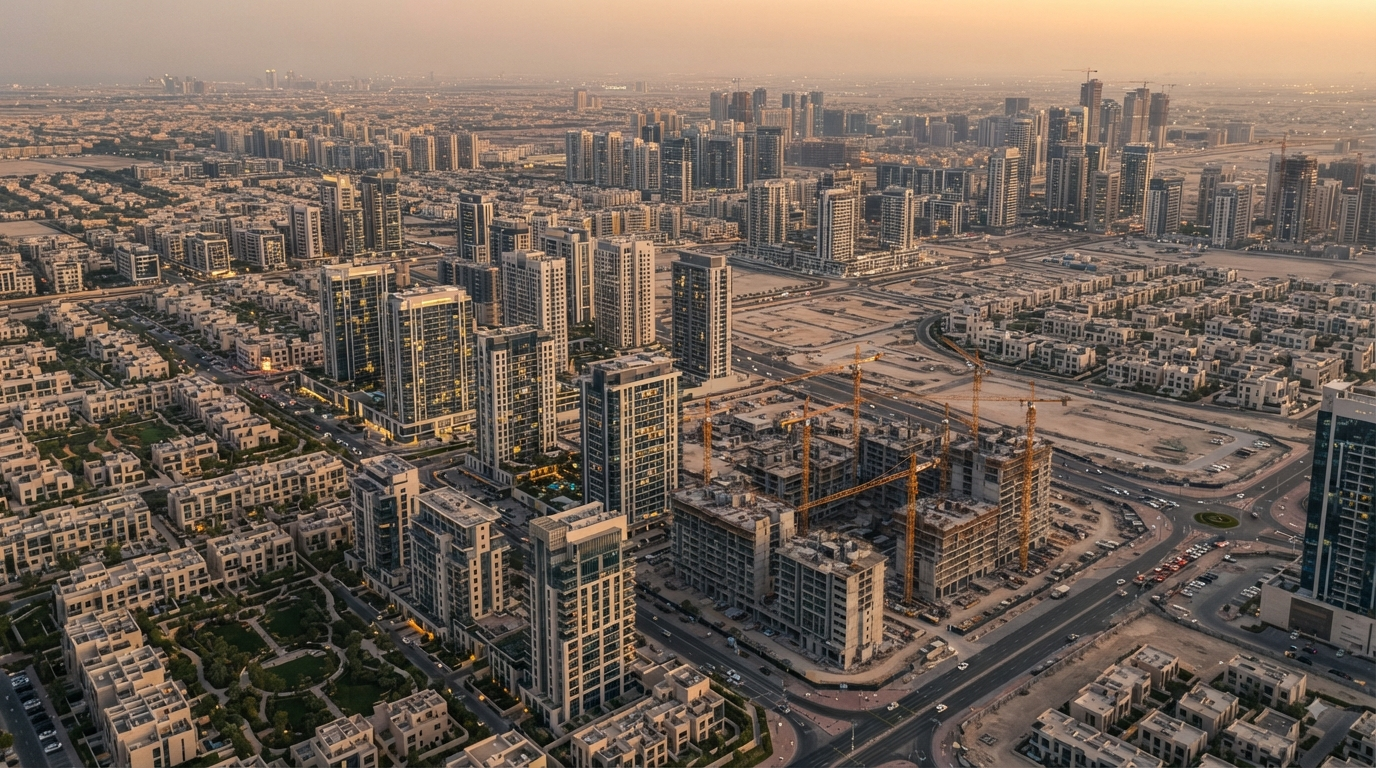
With over 100,000 new units expected to be delivered in 2026, understanding supply-demand dynamics is crucial. Oversupply risk concentrates in affordable mid-market communities — particularly JVC, Arjan, and Dubai Silicon Oasis. Premium and luxury segments see far less supply pressure due to high construction costs and developer positioning.
According to Knight Frank’s Dubai market analysis, premium zones with limited new supply maintain pricing power even in periods of broader market softening. Buyers targeting mid-market areas face more pronounced yield compression and longer void periods when new supply spikes.
- Mid-market oversupply zones: JVC, Arjan, Dubai Silicon Oasis, International City
- Limited supply zones: Palm Jumeirah, DIFC, Emirates Hills, Jumeirah Bay
- Check existing and planned supply for your target building’s community before buying
- Higher supply = longer void periods = lower effective net yield
- Premium locations historically recover faster from price corrections than mid-market zones
Choosing a location with constrained supply reduces the risks of buying property in Dubai more than any other single variable.
Liquidity and Exit Risk
Dubai property is not a liquid asset. Selling takes time, costs 2% in agent commission plus 4% DLD transfer fee for the buyer — which compresses your achievable sale price. Buying a highly specialized, niche property often results in a stuck asset that sits on the market for months. In the Dubai secondary market, standard layouts in prime locations sell significantly faster than experimental architectural designs.
Standard 1-bedroom and 2-bedroom apartments in established freehold zones exit fastest. Unusual layouts, high floors in saturated communities, or units with high service charges sell slowest.
- Standard layouts in prime locations: fastest exit, widest buyer pool
- Unusual or large-format units: slower exit, smaller buyer pool
- High service charge buildings: buyers discount the asking price to compensate
- Exit costs: budget 4–6% of sale price in buyer transfer fees (reduces your effective price)
- Minimum hold period for profitable exit after all costs: typically 3–5 years
Liquidity risk is a function of property type and location — standard apartments in prime freehold zones exit within weeks. Specialist units in mid-market zones can sit for months.
Market Correction Risk
Dubai’s property market has corrected before. Between 2014 and 2020, prices declined from peak levels before recovering sharply. Investors who bought at 2014 peaks and needed to sell before 2020 realized losses. After reaching record highs during 2024 and 2025, price growth moderated during 2026 as additional supply entered the market and buyers became more value conscious.
The risks of buying property in Dubai at market peaks are real. Buying with a long hold horizon of 5–10+ years significantly reduces the impact of short-term corrections. Buying with short-term flip intentions in a moderating market creates meaningful capital risk.
Market and liquidity risks reward patient investors and punish short-term traders. For example, investors who bought during the 2019–2020 price trough and held into 2024–2025 realized gains exceeding 40% in many prime zones. On the other hand, investors who buy at peak prices expecting further rapid appreciation carry real downside risk in a supply-heavy environment.
How to Mitigate Each Risk
| Risk | Severity | Mitigation |
| Off-plan delivery delay | Medium | Verify DLD escrow account; check developer track record |
| Hidden service charges | High | Request RERA Service Charge Index before purchase |
| Buying outside freehold zone | High | Verify DLD freehold registration before any payment |
| Unregistered agent/developer | High | Check RERA licence on DLD registry |
| Oversupply pressure | Medium | Target premium zones with constrained new supply |
| Liquidity at exit | Medium | Buy standard layouts in established freehold zones |
| Market correction | Low–Medium | Hold 5–10+ years; avoid peak-price speculative purchases |
| Currency/interest rate | Medium | Fix mortgage rate for 3–5 years; stress-test payments |
| Side agreements | High | Use only DLD-registered contracts; reject all side arrangements |
These risks become far more manageable when investors verify the project, developer, costs, and exit strategy before committing funds. A disciplined approach reduces avoidable mistakes and helps protect long-term returns.
Due Diligence Checklist Before Buying
| Check | How to Verify | Platform |
| Freehold zone confirmation | DLD registry search | dubailand.gov.ae |
| Developer RERA registration | DLD developer lookup | dubailand.gov.ae |
| Agent RERA broker licence | Broker card number check | dubailand.gov.ae |
| Escrow account (off-plan) | DLD escrow register | dubailand.gov.ae |
| Service charge rate | RERA Service Charge Index | dubailand.gov.ae |
| Developer track record | Completed project review | DLD + Bayut/Property Finder |
| Market supply pipeline | Area-specific supply data | Knight Frank, Bayut |
| Title Deed verification (ready) | DLD Title Deed check | Dubai REST app |
| SPA legal review | Engage RERA property lawyer | RERA-licensed firms |
Completing these checks before signing or transferring money gives buyers a clearer view of the property’s legal, financial, and market position. Proper due diligence also helps confirm that the investment matches both the buyer’s risk tolerance and long-term goals.
Ready to Invest in Dubai Safely?
The risks of buying property in Dubai are real — but every single one is manageable with verified developers, RERA-licensed agents, DLD-registered contracts, and a clear hold strategy aligned to your investment horizon. Dubai still delivers 6–9% rental yields, zero personal income tax, and Golden Visa eligibility at AED 2M — returns no comparable global market matches when due diligence is applied correctly.
Register for the Dubai Property Expo 2026 to meet verified developers, licensed agents, and investment specialists face to face — and invest with full confidence.
Frequently Asked Questions
Is Buying Property in Dubai Risky for Foreigners?
The risks of buying property in Dubai for foreigners are manageable, not prohibitive. The two highest risks are buying outside a designated freehold zone and purchasing through an unregistered agent — both are eliminated by a 10-minute DLD verification check before any payment. Once you buy a DLD-registered freehold Title Deed through a licensed agent, your legal protection is strong.
What Are the Hidden Costs of Buying Property in Dubai?
Hidden costs include the 4% DLD transfer fee, 2% agent commission, 0.25% mortgage registration fee, and annual service charges ranging from AED 10 to AED 80 per sq ft. Budget 7–8% above the property price for total transaction costs. Service charges represent the largest ongoing cost risk — always calculate net yield after service charges, not before.
Is Off-Plan Property in Dubai Safe to Buy?
Off-plan from an established, RERA-registered developer with a DLD escrow account carries low to medium risk. Ensure the developer has a registered escrow account with the Dubai Land Department and read the fine print regarding compensation for late handovers. Avoid developers without verifiable escrow accounts or completed project track records, as these carry significantly higher risk.
Can the Dubai Property Market Crash?
Dubai’s market has corrected before — prices fell between 2014 and 2020 before recovering strongly. With 100,000+ new units entering in 2026, oversupply risk in mid-market zones is real and present. Premium freehold zones with constrained supply are more resilient. Investors with a 5–10 year hold horizon absorb corrections without pressure to sell at a loss.
How Do I Avoid Property Scams in Dubai?
Verify every agent’s RERA broker licence and every developer’s DLD registration before paying anything. Never sign a side agreement outside the official DLD contract. Never transfer deposit funds to a personal account — always pay to a DLD trustee or registered escrow account. Check the Dubai Land Department registry for ownership confirmation before signing any sales purchase agreement.