




After 15 years in real estate, I have watched Australian investors make the same mistake repeatedly. They chase yield in a market that structurally cannot deliver it.
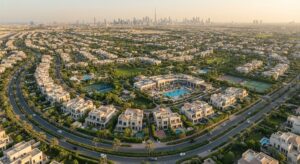
Sydney gross yields sit at 2.8%. Melbourne averages 3.1%. Meanwhile, investors holding Dubai apartments in Jumeirah Village Circle are banking 9% to 11% annually, with zero tax taken from that income.
That gap is not a coincidence. It is a structural difference between two completely different investment environments. And more Australians are recognising it every single year.
This guide explains exactly how to buy property in Dubai from Australia. Not the promotional version. The real version is built on experience, market data, and the lessons learned from guiding Australian investors through this process firsthand.
By the time you finish reading, you will know whether Dubai belongs in your portfolio and precisely how to act if it does.
Can Australians Legally Buy Property in Dubai?
This is always the first question. The answer is straightforward.
Dubai opened its property market to foreign nationals in 2002 through a landmark freehold ownership law. Australians have full legal rights to purchase in designated freehold zones, with no restrictions on ownership or repatriation of funds.
What Freehold Ownership Actually Means
When you buy property in Dubai from Australia in a freehold zone, you own the asset outright. No leasehold expiry. No residency requirement. No government approval is needed to sell or transfer.
The Dubai Land Department registers every transaction and issues a government-backed title deed in your name. Ownership is permanent and inheritable.
The most popular freehold zones for Australian investors include:
- Dubai Marina, with strong short-term rental demand
- Jumeirah Village Circle, for high yield and affordable entry
- Business Bay, for proximity to Dubai’s commercial core
- Dubai South, for early-mover capital growth potential
- Downtown Dubai, for premium positioning and resale liquidity
You Do Not Need to Be There
Most Australians complete the entire purchase remotely. Digital contracts, international bank transfers, and Power of Attorney arrangements handle everything. You never need to board a flight to secure your investment.
Why Australians Are Moving Capital Into Dubai
The numbers tell this story better than any pitch ever could.
Australian residential property delivered average gross yields of 3.2% across capital cities in 2025, according to CoreLogic. After income tax at a 37% marginal rate, land tax, and property management fees, many investors are netting below 2%.
Dubai’s market operates differently. Gross yields between 7% and 12% are realistic and documented. More importantly, the UAE charges zero tax on rental income. What you earn, you keep.
The Tax Comparison That Changes Everything
Many Australian investors do not fully grasp how much tax reshapes their returns until they see both markets side by side.
In Australia, a $700,000 investment property yielding 3.5% generates $24,500 in gross rent annually. After income tax at 37%, land tax, and management fees, your net return can fall below $12,000. That is below 1.8% net on your capital.
In Dubai, a comparable investment at AED 700,000 yielding 8.5% generates AED 59,500 annually. Zero income tax applies. After management fees, you net above 7%. The ATO’s own guidance confirms all overseas rental income is accessible in Australia, but foreign tax offsets apply where applicable.
Additionally, the AED has been pegged to the USD at 3.67 since 1997. For Australians seeking currency diversification beyond AUD, this peg offers meaningful stability.
Step-by-Step Process to Buy Property in Dubai from Australia

This process looks complicated from the outside. In practice, it follows a clear sequence. Here is exactly how it works.
Step 1: Define Your Investment Goal
Before selecting any property, know what you are optimising for. Rental income, capital growth, and Golden Visa eligibility each point toward different communities and price points.
Yield-focused investors perform best in JVC, Dubai South, and Business Bay. Growth-focused buyers target off-plan launches in the Dubai Islands and Dubai South. Golden Visa seekers need properties at AED 2 million or above.
Getting this wrong at the start costs you both time and money. Get it right, and every subsequent decision becomes simpler.
Step 2: Property Selection and Due Diligence
Work with a RERA-licensed broker to shortlist verified projects. Evaluate the developer’s completion history, the community supply pipeline, and projected rental yields based on comparable transactions.
Key things to verify before committing:
- Developer’s previously completed projects and handover record
- RERA escrow account registration for off-plan purchases
- Service charge schedule per square foot annually
- Community infrastructure timeline and amenity completions
Most Australian investors prefer off-plan for lower entry and flexible payments. Ready properties suit those wanting immediate rental income from day one.
Step 3: Reservation and SPA Signing
Once you select a property, a reservation deposit secures your unit. This typically ranges from AED 5,000 to AED 50,000 depending on the developer.
You then receive the Sales Purchase Agreement digitally. This document is legally binding. It outlines your payment schedule, handover date, delay penalties, and cancellation terms. Sign digitally or through your Power of Attorney representative in Dubai.
Step 4: Payments and Registration
Initial payments typically range from 10% to 20%. For off-plan projects, remaining payments are spread across construction milestones, often interest-free. All funds go directly into a RERA-regulated escrow account. The developer cannot touch that money until engineers verify each milestone.
Upon completion, the Dubai Land Department issues your title deed. Your broker or POA representative handles registration without requiring your physical presence.
Full Cost Breakdown for Australian Buyers
Transparency here matters. Hidden costs surprise many first-time international buyers.
Transaction Costs
The total additional costs to buy property in Dubai from Australia typically land around 6% to 7% of the purchase price. Here is exactly where that goes:
- Dubai Land Department fee: 4% of property value
- Agency commission: 2% of property value
- Trustee and admin fees: approximately AED 4,000 to AED 6,000
- Power of Attorney attestation from Australia: approximately AUD 800 to AUD 2,500
Compare that to New South Wales, where stamp duty alone on a $700,000 property exceeds $27,000. Victoria charges similar amounts. Dubai’s transaction cost structure is genuinely competitive.
Ongoing Annual Costs
Service charges range from AED 10 to AED 40 per square foot annually. Premium towers in Dubai Marina and Downtown sit at the higher end. Communities like JVC and Dubai South fall at the lower end.
Factor in property management fees of 5% to 10% of annual rent if you plan to manage the property remotely from Australia. This is standard practice and entirely workable.
Developer Payment Plans and Why They Work for Australians

This is the feature that genuinely surprises most Australian investors when they first explore how to buy property in Dubai from Australia.
Interest-Free Installments
Most off-plan developers offer structured payment plans across the construction timeline. A typical plan requires 10% at booking, staged payments during construction linked to verified milestones, and a final amount at handover.
Some developers now offer post-handover payment plans extending 2 to 5 years beyond completion. Critically, none of these installments carries interest. You pay the agreed price in stages with zero financing cost.
For Australians carrying expensive mortgages, this structure represents a completely different capital model. Your AUD 50,000 to AUD 80,000 initial outlay secures a property worth AUD 250,000 to AUD 400,000. The remaining payments come from rental income or staged personal capital without bank involvement.
Established developers offering flexible plans include Emaar, DAMAC, Binghatti, Imtiaz, Ellington, and Omniyat. Each maintains strong RERA compliance records and documented completion histories.
The UAE Golden Visa: What Australian Investors Need to Know
For many Australians, the Golden Visa starts as a side consideration. Over time, it often becomes central to the investment decision.
How It Works
Invest AED 2 million or more in Dubai property, and you qualify for a 10-year UAE residency visa. The visa extends to your spouse and dependent children. It requires no employment sponsorship and carries no minimum stay requirement to maintain.
Why Australians Value It
The Golden Visa opens UAE banking accounts, which simplifies rental income management significantly. It allows you to spend extended periods in Dubai without visa restrictions. It provides a long-term base for business activity or retirement planning in a zero-income-tax environment.
You do not need the Golden Visa to buy property in Dubai from Australia. However, for investors near the AED 2 million threshold, structuring your purchase to qualify adds meaningful long-term value at minimal additional cost.
Risks You Must Understand Before Investing

Every experienced investor I know values honest risk assessment above everything else. Dubai is a strong market. It is not a risk-free market.
Currency Movement
Your returns convert from AED to AUD at prevailing exchange rates. The AED-USD peg protects against USD volatility. However, AUD fluctuations against the USD create variability in your effective Australian dollar returns.
Manage this by holding a 3 to 5-year minimum investment horizon. Short-term currency movements smooth out over longer periods. Some investors maintain AED-denominated accounts and convert strategically when the rate is favorable.
Developer and Construction Risk
Not every developer delivers on time or to specification. Smaller developers without track records carry disproportionate risk for first-time international buyers. Stick to developers with verified completion histories, particularly for your first Dubai purchase.
Always confirm the RERA escrow account number for your specific project. Verify it independently through the Dubai Land Department before transferring any funds.
Market Timing and Cycle Risk
Dubai moved through a significant correction between 2015 and 2019 before its strong recovery from 2021. Investors who bought at the 2014 peak experienced several years of paper losses before recovery. Understanding where the market sits in its cycle matters when you buy property in Dubai from Australia.
Focus on income fundamentals first. A property generating 8% yield performs regardless of whether prices move sideways for 12 months.
Dubai vs Australia: The Investment Comparison That Matters
This is not theoretical. These numbers reflect what Australian investors are actually experiencing in both markets right now.
A Sydney apartment purchased for AUD 800,000 yields 3% gross. After tax, land tax, strata, and management, the net return falls around 1.5% to 1.8%. Your property needs to appreciate significantly just to justify the holding cost.
A Dubai apartment purchased for AUD 300,000 equivalent in Business Bay yields 8% gross. After management fees and zero tax, net return sits around 6.5% to 7%. The property generates meaningful income from year one.
Furthermore, Dubai’s off-plan market allows you to buy property in Dubai from Australia at today’s prices with staged payments across 2 to 3 years. By handover, comparable units often trade 15% to 25% above the original launch price in established developer projects.
The two markets serve different roles in a portfolio. Australian property typically anchors long-term capital growth. Dubai property generates active income and medium-term appreciation simultaneously.
How Bright Realty International Supports Australian Buyers
Bright Realty International was founded in Australia and expanded specifically to bridge both markets. That dual background matters when you buy property in Dubai from Australia.
The team provides carefully shortlisted projects based on your budget, timeline, and goals. You access 100-plus curated opportunities from verified developers across every major freehold community. Full transaction support covers property selection, SPA review, payment processing, and title deed registration.
One team. One coordinated process. No juggling multiple agents, developers, and legal contacts across two countries.
Your Dubai Investment Starts Here
The case to buy property in Dubai from Australia has never been more straightforward. Zero rental income tax. Yields between 7% and 12%. Permanent freehold ownership. Interest-free payment plans. And a market backed by one of the world’s most transparent property regulatory frameworks.
Australian investors sitting on underperforming local assets are making a strategic mistake by waiting. Dubai’s 2026 market rewards early movers who understand the fundamentals and act with preparation.
Bright Realty International has helped Australian investors navigate this market from both sides of the transaction. Connect with our team today and explore which projects match your goals, budget, and timeline.
Schedule your consultation at Bright Realty International
Frequently Asked Questions
Here are some the most frequently asked questions that comes in mind before buy property in dubai from australia.
Can Australians buy property in Dubai without visiting?
Yes. The full purchase process is completed remotely through digital contracts, international wire transfers, and Power of Attorney arrangements. Thousands of Australians have bought Dubai property without leaving home.
What is the minimum budget to start?
Entry-level apartments in communities like JVC and Dubai South start from approximately AED 500,000 (around AUD 200,000). Developer payment plans reduce your upfront commitment to as little as 10% of the purchase price.
Is rental income from Dubai taxable in Australia?
Yes. The ATO requires Australian residents to declare all foreign rental income. However, you pay zero tax in Dubai, and foreign income tax offsets may apply. Speak with a tax advisor familiar with both jurisdictions before purchasing.
How does the escrow system protect my money?
RERA requires all off-plan developers to hold buyer funds in a regulated escrow account. Independent engineers verify construction milestones before any funds are released to the developer. Your capital is protected throughout the build process.
How long does the full buying process take?
Ready property purchases typically complete within 2 to 4 weeks from reservation to title deed. Off-plan purchases follow the developer’s construction timeline, which ranges from 18 months to 4 years, depending on the project stage at purchase.