



Quick Answer
- Branded residences carry a 25% to 64% Dubai price premium.
- Real brand involvement means design, service, and management standards.
- Hotel-branded units consistently outperform fashion-only collaborations.
- Service charges run 2 to 3 times higher than non-branded equivalents.
- Brand agreements can expire, taking the premium value with them.
Branded residences in Dubai now command premiums of 25% to 64% over comparable non-branded luxury stock, and Dubai leads the world with over 130 active projects according to CBRE’s 2025 UAE Branded Residences Market Review. The category has grown from a niche trophy product into a structured asset class attracting institutional capital, long-stay corporate tenants, and globally mobile UHNWI buyers who treat the brand name as a proxy for certainty.
The problem is that not every premium is earned. A licensed logo on a standard building creates the appearance of branded living without the substance. Some of the weakest project deliveries in Dubai have carried the biggest names, and buyers who confuse branding for quality end up holding an expensive mistake rather than a resilient asset.
This guide cuts through the marketing to answer the only question that matters for serious investors: when are branded residences in Dubai genuinely worth the premium, and when are they not? We cover what real brand involvement looks like, which asset types justify the price, what it actually costs to hold one, where the real risks sit, and how to tell a strong deal from an expensive logo.
What Makes A Branded Residence?
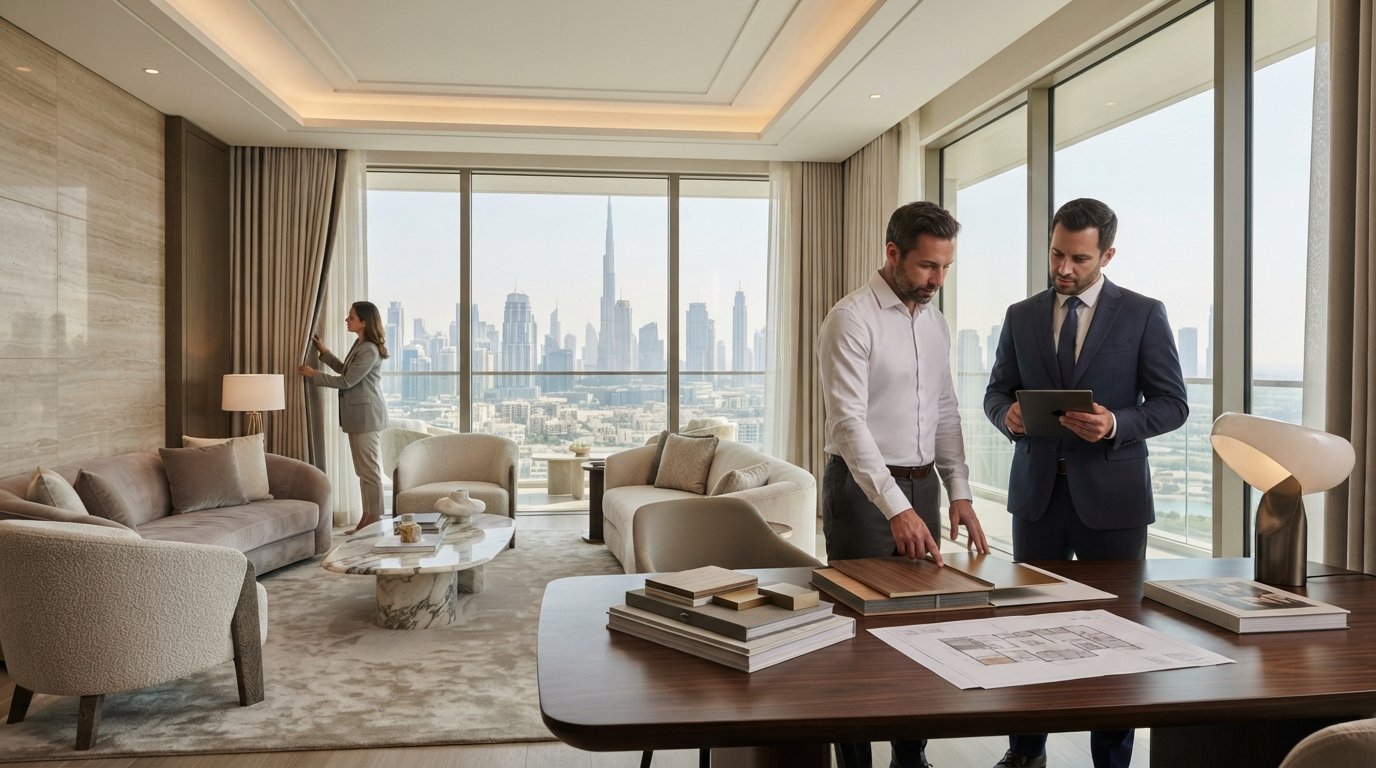
The word “branded” covers a wide spectrum of actual involvement, and branded residences in Dubai can range from genuine deep collaborations to a licensed logo on a standard building.
Brand Involvement Levels
A properly executed branded residence has the partner brand co-creating the concept from day one. In the best cases, that means:
- Co-designing the overall concept and narrative
- Influencing architecture, interiors, and material specifications
- Defining service standards, staffing models, and operating philosophy
- Shaping the lifestyle offering beyond aesthetics alone
Buyers of branded residences in Dubai are not paying for a logo in the lobby. They are paying for a guarantor of experience, a third party whose own reputation is on the line if the building underperforms.
| Involvement Level | What The Brand Delivers | Premium Justified? |
| Full collaboration | Design, operations, service standards, ongoing management | Yes, if location is prime |
| Design-only | Aesthetics and interiors, no operational role | Partially |
| Logo-licensed | Name on building, minimal actual involvement | Rarely |
| Mid-sale branding | Added after launch to rescue demand | No |
Not every branded residence delivers the same value. Understanding the level of brand involvement helps buyers judge whether the premium price is genuinely justified.
Hotel Vs Fashion
Hotel-branded residences in Dubai, such as Armani, Bulgari, Dorchester Collection, and Ritz-Carlton, carry an operational infrastructure that fashion or automotive collaborations generally cannot match:
- Hospitality groups manage buildings professionally long after handover
- Consistent service standards maintained across multiple cycles
- Fashion houses lend design DNA but rarely provide operational backbone
- Brand prestige without operations creates a different risk profile
The strongest branded residences combine design excellence with long-term operational management. Buyers should evaluate the brand’s ongoing involvement, not just the name on the building, before paying a premium.
Standalone Vs Hotel-Attached
The two main structures for branded residences in Dubai create meaningfully different living and investment experiences:
- Standalone projects (e.g. Bulgari at Jumeirah Bay Island): no hotel guests, fully private environment
- Hotel-attached projects (e.g. Dorchester Collection): access to full hotel service infrastructure alongside private ownership
- Standalone suits buyers who prize discretion and privacy above all else
- Hotel-attached suits buyers optimising for service depth and managed income
Our guide to investment property in Dubai breaks down how buyers navigate this choice across asset types.
Understanding what a brand actually contributes is the foundation for everything that follows, because the premium only holds when that contribution is real and ongoing.
What Does The Premium Buy?
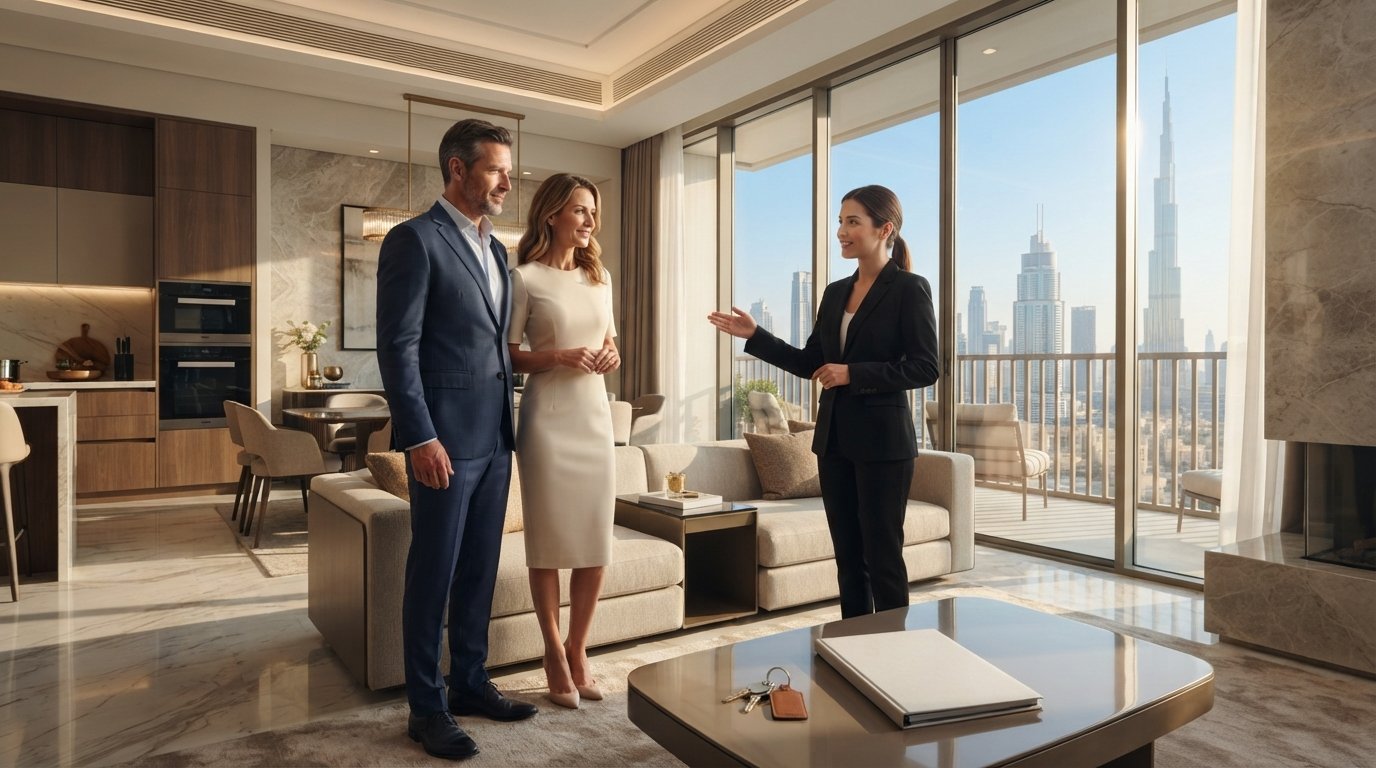
Branded residences in Dubai trade at a median premium of around 31% globally, according to Branded Living’s 2026 definitive guide, but Dubai specifically has recorded premiums reaching 64%, confirmed by MyDubai Off-Plan’s 2026 investor guide, driven by strong international buyer competition and restricted supply in prime zones.
Capital Preservation Record
Branded residences in Dubai have demonstrated stronger value retention across market cycles than comparable non-branded luxury stock. According to Brand Atlas’ 2026 market analysis, global data confirms several structural advantages:
- Branded units sell 25% faster than non-branded equivalents globally
- W Residences Dubai reportedly sold out in 30 days at launch
- Over 85% of AED 20 million-plus deals in H1 2025 were cash transactions
- High-conviction, long-hold buyers underpin pricing stability across cycles
That velocity reflects genuine buyer conviction and confirms why branded residences in Dubai attract high-conviction, long-hold capital rather than speculative short-term flips.
Rental Yield Comparison
Units in areas like Dubai Hills and Palm Jebel Ali achieve rental rates 15% to 25% higher than comparable non-branded units. According to Savills’ Global Branded Residences Report 2025 via Homesphere Real Estate, branded residences command price premiums between 25% and 35% over non-branded units in the same location. Palm Jumeirah branded residences typically deliver 4.5% to 6.5% gross yield, with stronger nightly rates for approved short-term rental units.
| Asset Type | Typical Gross Yield | Premium vs Non-Branded |
| Palm Jumeirah branded | 4.5% – 6.5% | 15% – 25% higher rental rate |
| Downtown branded | 5.0% – 7.0% | 20% – 30% above non-branded |
| Non-branded luxury (same area) | 6.0% – 8.0% | Baseline |
| Standard Dubai apartment | 6.0% – 8.0% | N/A |
The yields show a real rental premium, but net returns depend entirely on what you pay in annual costs, which is where many buyers discover the full picture only after purchase.
These numbers make the case for branded residences in Dubai look strong, but the strength depends entirely on who the brand is, how deeply they are involved, and crucially, how long that involvement is contractually guaranteed.
What Does Ownership Cost?

The acquisition premium is only part of the cost equation for branded residences in Dubai. Annual holding costs can quietly erode the yield advantage that attracted buyers in the first place.
Service Charges
Annual holding costs for branded residences in Dubai are materially higher than non-branded equivalents:
- Service charges run 2 to 3 times higher than prime non-branded stock
- Charges fund service standards, staffing, landscaping, and amenity upkeep
- Skipping service-charge due diligence is the most common first-time buyer mistake
- Higher charges directly compress net yield even when gross rental rates are strong
Higher service charges are not necessarily a drawback when they support premium amenities and professional management. Buyers should weigh these ongoing costs against the long-term value and rental performance the property can deliver.
Management Fees Structure
Beyond standard service charges, branded residences in Dubai often embed additional management and branding fees:
- Brand management fee: 3% to 6% of annual rental income on top of base charges
- Hotel-managed projects restrict who can lease the property
- Minimum stay rules and approved tenant profiles limit flexibility
- Revenue-share structures reduce effective control over the asset
Buyers who factor only the gross yield and entry premium into their calculations often discover the net position only after purchase.
Full Acquisition Cost
| Cost Item | Standard Amount |
| DLD transfer fee | 4% of purchase price |
| Agency commission | 2% (resale/secondary) |
| Branded premium over market | 25% to 64% above non-branded |
| Annual service charge | 2-3x non-branded equivalent |
| Brand management fee | 3% to 6% of rental income |
| Oqood registration (off-plan) | Payable at registration |
The honest total cost picture- entry price plus DLD plus annual charges plus management fees- is the calculation that separates an informed branded purchase from an expensive impulse.
Knowing what it costs to hold one is important, but it is equally important to know where the whole premise breaks down, because there are real failure modes that brochures never explain.
Where Do Premiums Fall Short?
Branded residences in Dubai are not a universally sound investment. There are specific scenarios where the premium becomes dead weight rather than structural value.
Brand Agreement Risk
Most branding agreements on branded residences in Dubai run for 10 to 15 years, and many allow the brand to exit quietly at the end of that term:
- Buyers almost universally assume the branding is permanent
- Contracts rarely guarantee it beyond the initial term
- If the brand exits, the resale premium exits with it
- The developer and brand move on; the owner absorbs the value impact
Brand partnerships do not always last for the life of a property. Understanding the terms of the branding agreement helps buyers assess whether today’s premium is likely to hold its value over the long term.
Supply Saturation Warning
According to CBRE’s UAE Branded Residences Market Review 2025, off-plan branded projects grew from 3% of volume in 2019 to 5% in 2025, with value share rising from 7% to 14% over the same period. That supply growth creates pressure:
- Lesser-known brands now face premium compression
- Purely aesthetic collaborations lack supply scarcity
- Buyers must distinguish genuine brand depth from marketing saturation
- Project-level due diligence matters more as supply widens
With over 140 branded projects either completed or in the pipeline, the supply of branded residences in Dubai is no longer restricted across the board.
Cosmetic Branding Risk
The biggest red flag in any purchase of branded residences in Dubai is a mid-sale brand announcement. If a development launched without a brand and acquired one halfway through the sales process, that almost always signals a demand-rescue move:
- The brand was absent when the product was designed
- The product does not carry the brand’s actual standards
- Buyers pay the premium and receive a standard building with a famous name
- Marketing language rarely distinguishes genuine collaboration from logo licensing
These risks are real, but they are avoidable with the right due diligence framework. Before committing to branded residences in Dubai, buyers should verify:
- Brand agreement term length and exit provisions
- Developer’s track record on previous branded deliveries
- Service charge history, not just projections
- Location’s independent resale liquidity without the brand
Our best areas to buy property in Dubai guide identifies which locations carry the deepest branded resale liquidity.
Which Projects Lead In 2026?
The branded residences in Dubai landscape spans a wide range of collaborations, from long-established hospitality partnerships to newer automotive and fashion-house entries.
Hospitality-Led Benchmarks
Armani Beach Residences and Bulgari Residences on Jumeirah Bay Island represent the clearest examples of genuinely hospitality-led branded residences in Dubai:
- Full design involvement from the brand from day one
- Managed service standards delivered by the hospitality operator
- Long-term operator agreements giving buyers ongoing confidence
- Bugatti Residences in Business Bay reached ~198% of surrounding comparable pricing
These projects show how long-term operational involvement can strengthen both buyer confidence and asset value. Their performance reflects more than brand recognition alone.
Automotive Fashion Entries
Newer collaborations including Mercedes-Benz Places, Lamborghini Mansions, and Karl Lagerfeld Beach Residences in Ras Al Khaimah reflect the expanding definition of branded residences in Dubai and the wider UAE:
- Attract buyers motivated by design identity over operational hospitality
- Resale and rental track record still maturing for this sub-category
- Higher brand-name recognition does not automatically mean operational depth
- Due diligence on operator involvement matters more here than in hotel-led projects
These collaborations expand buyer choice, but the strength of the operator remains more important than the brand name itself. Careful due diligence helps separate lasting value from marketing appeal.
Emaar’s Vida Model
Vida Residences demonstrate that home-grown branded residences in Dubai can compete with international names when execution is genuine:
- Clean architecture and sensible layouts over experimental design
- Durable finishes maintained across the Emaar asset-management ecosystem
- Common areas maintained and landscaping looked after long after handover
- Positioned at the social core of master-planned communities, not above them
Our Dubai Hills property for sale page includes Vida-community listings that illustrate this balance of brand consistency and livability.
| Project | Brand Type | Location | Premium vs Market |
| Bugatti Residences | Automotive | Business Bay | ~198% above comparable |
| Bulgari Residences | Hospitality | Jumeirah Bay Island | 40%+ above non-branded |
| Armani Beach Residences | Hospitality/Fashion | Palm Jumeirah | 30-35% above non-branded |
| Vida Residences | Developer own-brand | Dubai Hills, Creek Beach | 15-25% above non-branded |
| Mercedes-Benz Places | Automotive | Downtown Dubai | 30-35% above non-branded |
The project landscape is wide, which means the due diligence burden on buyers is correspondingly high, and that burden is exactly what separates a sound branded purchase from an overpriced one.
Ready To Invest Today?
Branded residences in Dubai are worth the premium when the brand is genuinely embedded in design, operations, and long-term asset management, and when the location carries deep enough resale liquidity to recover the entry cost at exit. The CBRE data showing a 26% year-on-year increase in branded transaction volume confirms that sophisticated buyers are making this calculation successfully. The premium is not irrational, but it does require doing the work that most buyers skip.
The three questions that matter before any purchase of branded residences in Dubai are: How deeply is the brand contractually involved? What do the annual service charges and management fees actually cost net of yield? And what happens to resale value if the brand agreement ends? Getting clear answers to all three separates a defensible investment from an expensive brand experience that erodes returns over time.
Speak with our team today to review current branded residences in Dubai opportunities, and explore our Dubai investment properties to compare branded and non-branded performance across active listings.
Frequently Asked Questions
Are Branded Residences Good Investments?
Branded residences in Dubai are a good investment when the brand is operationally embedded, the location carries strong resale liquidity, and the full holding costs have been modelled against realistic net yield. The asset class has demonstrated stronger value retention and faster resale velocity than comparable non-branded luxury stock, with CBRE confirming 26% year-on-year growth in transaction volume through 2025. The risk lies not in the concept but in the quality of execution, and in whether the brand’s involvement is genuine or cosmetic.
What Premium Do Branded Residences Carry?
Branded residences in Dubai typically trade at a premium of 25% to 64% over comparable non-branded luxury units in the same location, depending on the brand, zone, and depth of collaboration. According to Savills’ Global Branded Residences Report 2025, the average premium sits between 25% and 35%, while ultra-prime projects such as Bugatti Residences have achieved pricing close to 198% of surrounding comparables. The premium reflects the perceived certainty the brand delivers, not just the name on the door.
Do They Generate Higher Rental Yields?
Branded residences in Dubai generate 15% to 25% higher gross rental rates than comparable non-branded stock, but net yield is often compressed by service charges and management fees running 2 to 3 times the non-branded equivalent. Palm Jumeirah branded units typically deliver 4.5% to 6.5% gross yield, which can compete with non-branded apartments in the same district once the higher rent is factored in. Net yield after all holding costs is the only figure that matters when comparing the two categories.
How Long Do Brand Agreements Last?
Most brand partnership agreements on branded residences in Dubai run for 10 to 15 years, and many contracts allow the brand to exit at the end of that term without any obligation to extend. This is one of the most underappreciated risks in the category, because the resale premium is directly tied to the brand’s ongoing presence. Prospective buyers should request the full branding agreement and have it reviewed by a property lawyer before committing.
What Are The Main Risks?
The main risks of buying branded residences in Dubai include brand agreement expiry, higher annual service charges and management fees, supply saturation compressing premiums on lesser-known brands, fit-out restrictions limiting customisation, and mid-sale branding announcements that signal demand rescues rather than genuine collaborations. The underlying product quality matters more than the name attached to it, and buyers who prioritise developer track record, operator involvement, and contractual clarity consistently outperform those who buy on brand recognition alone.