





Quick Answer
- Developer handover history matters more than price.
- Family-scale units now outperform speculative micro-units.
- Precision location targeting beats broad area bets.
- AED 2 million property secures a Golden Visa.
- Long-term yields average 7 to 8 percent.
The Dubai property investment strategy that worked in 2023 no longer works in 2026. Dubai recorded AED 682.5 billion in transactions across 214,912 sales in 2025, a 49.6% surge on the year before, and that scale of activity has separated disciplined buyers from speculative ones fast.
Most first-time investors still chase whatever listing looks cheapest or whichever area is trending on social media. That approach worked when almost any purchase appreciated. It does not work in a market this large, because oversupplied submarkets and prime, scarce zones now perform very differently, and picking the wrong one quietly erodes returns for years.
This guide breaks down the actual Dubai property investment strategy that experienced buyers are using in 2026: how they vet developers, why they choose usable family-scale properties over speculative micro-units, how they combine ownership with Golden Visa and tax structuring for long-term wealth protection.
Why Developer Track Record Matters
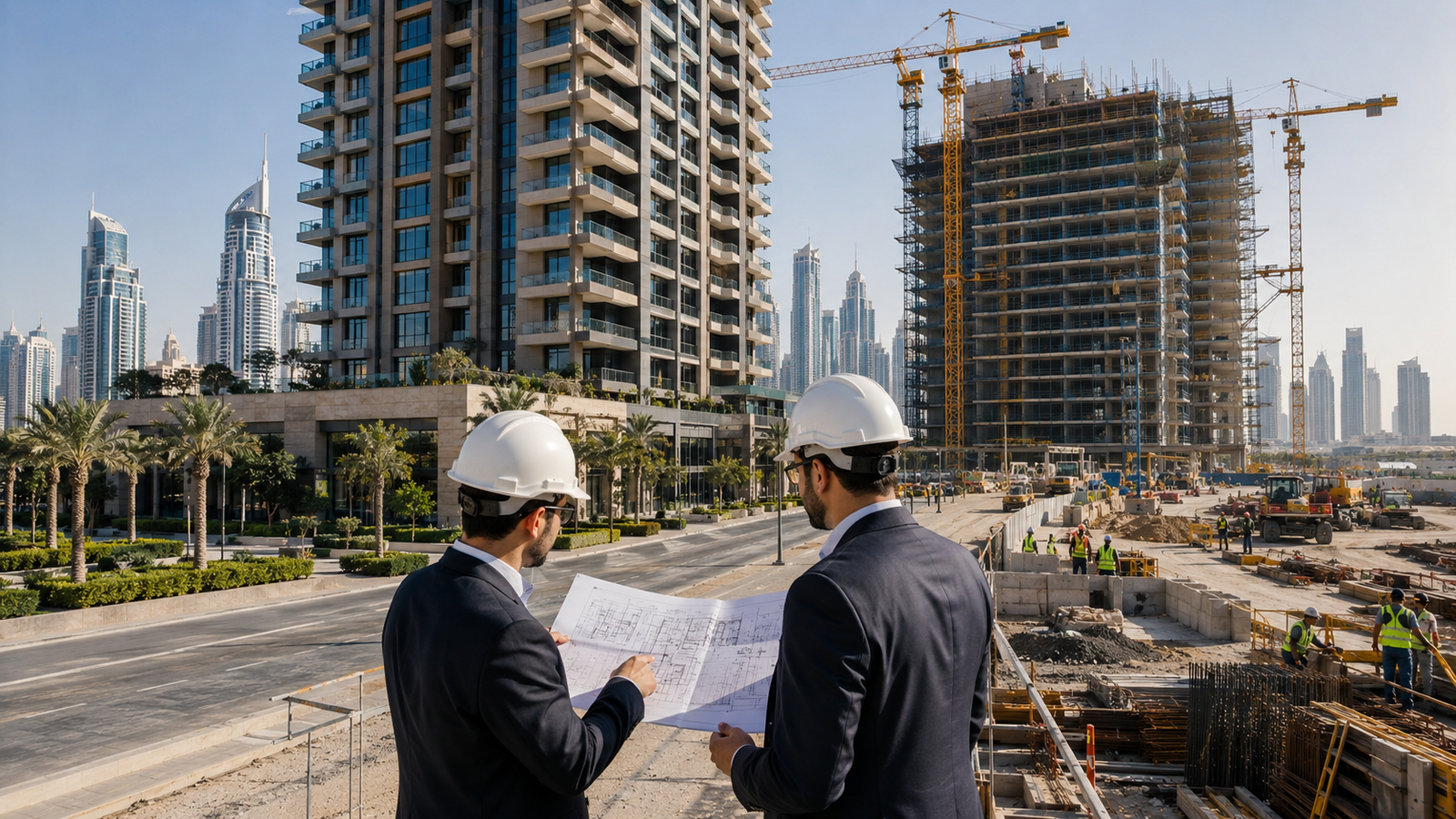
A sound Dubai property investment strategy starts with the developer, not the unit. In earlier cycles, buyers snapped up almost anything available. That approach is far riskier now that supply has scaled dramatically.
Handover History Check
Reviewing a developer’s history of on-time handovers is the single fastest way to filter out risk. Delays compound quickly across a large portfolio, and a developer with a poor delivery record puts your capital timeline at risk before you even consider yield.
Service Fee Transparency
Ongoing service charges directly reduce net income, so a careful Dubai property investment strategy always confirms the fee structure before purchase rather than after. Developers with transparent, predictable service charges tend to protect resale value better than those with vague or rising fee schedules.
Established Developer Examples
Purchasing from established groups such as Emaar Properties helps protect asset value against construction delays and quality shortfalls, a pattern repeated across current market commentary on developer selection. Our verified developer profiles cover the track record of every group active on our network.
| Factor | Mass-Market Buyer (2023-24) | Disciplined Buyer (2026) |
| Selection basis | Price and availability | Developer track record |
| Unit focus | Speculative micro-units | Family-scale, usable layouts |
| Location approach | Broad area trends | Precision, scarcity-driven |
| Visa planning | Reactive | Structured from day one |
Developer diligence sets the floor for a safe purchase, but the unit itself still needs to match how people actually want to live and rent in 2026.
Choosing a reputable developer reduces risk, but it is only one part of a successful investment strategy. Comparing delivery history, service charges, and project quality together helps buyers make more confident long-term decisions.
What Makes A Property Usable?
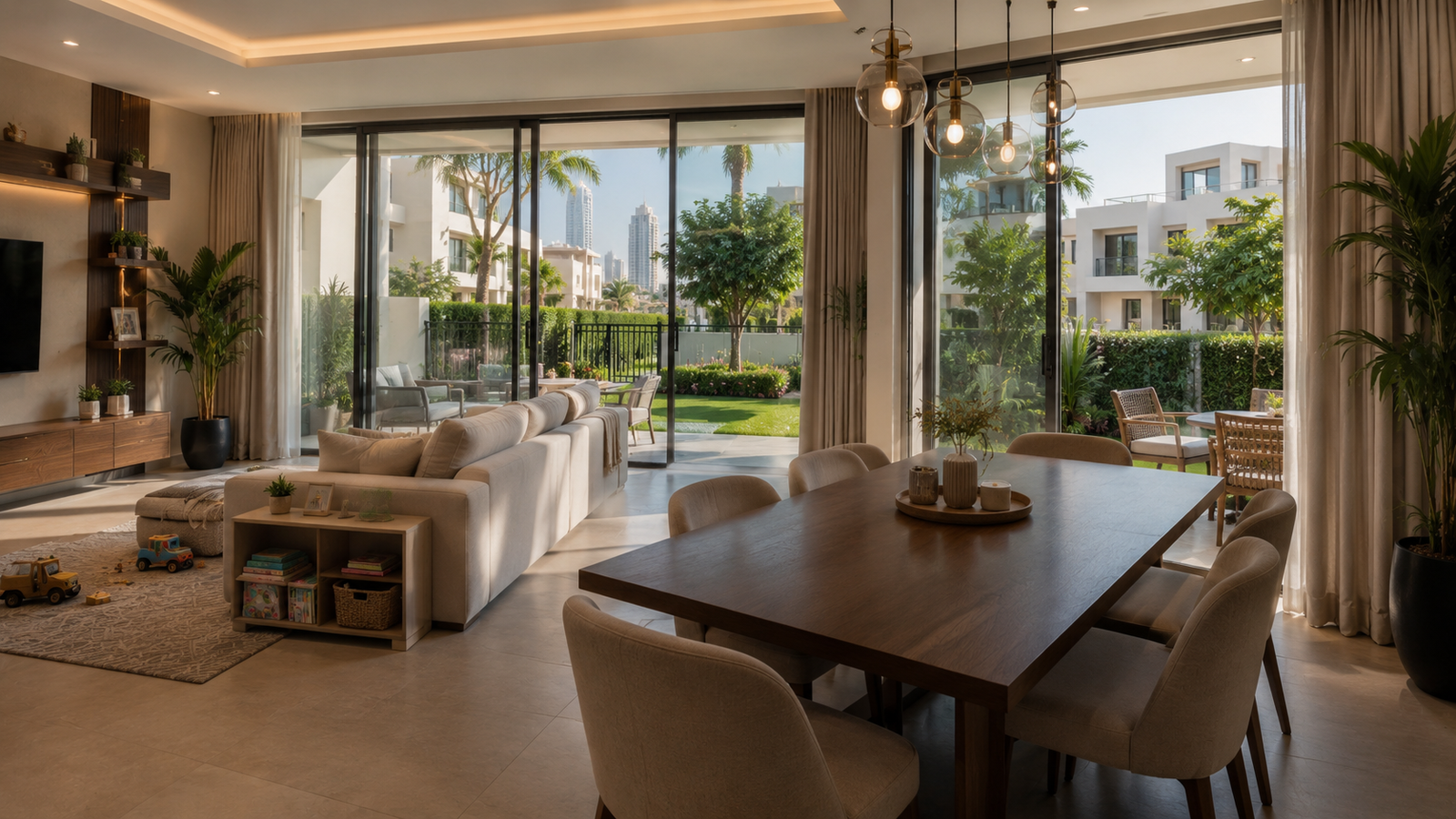
The current Dubai property investment strategy favors long-term functionality over quick flips, which is a meaningful shift from prior cycles.
Family-Scale Layouts
Successful buyers increasingly target larger, family-scale properties such as villas and townhouses rather than compact investor units, a shift now central to most Dubai property investment strategy planning. These layouts attract long-term end-users who stay longer and generate more stable rental income than transient tenants.
Emerging Area Value
Emerging locations such as Dubai South are drawing this family-scale demand because they combine larger floorplates with lower entry prices than established districts, making them a growing part of many buyers’ Dubai property investment strategy. Our Dubai South listings reflect this shift toward functional, larger-format living.
Long-Term Tenant Appeal
Well-built towers and communities with genuine livability retain tenants longer, which lowers vacancy and turnover costs. Build quality and design have become investment metrics in their own right, not just lifestyle features.
Usability determines how a property performs once it is tenanted, but where that property sits still does most of the heavy lifting on long-term value.
Which Areas Deserve Precision Targeting?
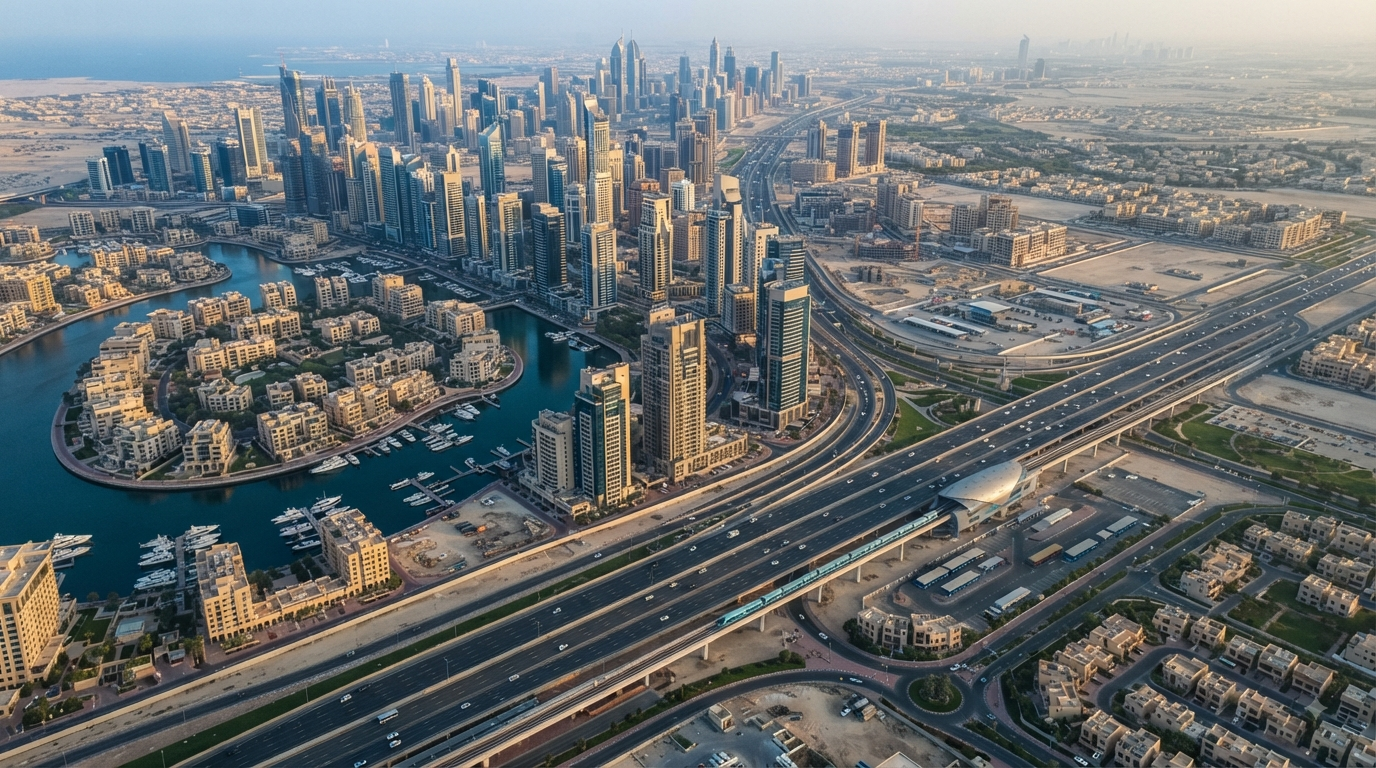
A precise Dubai property investment strategy replaces broad, macro-level area bets with targeted due diligence on specific submarkets.
Prime Zone Scarcity
A precision-driven Dubai property investment strategy fiercely targets prime zones with limited availability, including Dubai Hills Estate, Business Bay, and Dubai Marina, where scarcity supports pricing power. Our best areas to buy property in Dubai guide breaks these zones down individually.
Oversupplied Submarkets
In areas facing high new supply, a disciplined Dubai property investment strategy negotiates aggressively rather than paying asking price, because oversupply weakens both rental pricing and resale leverage. Treating every listing in a popular area as equally attractive is a common and costly mistake.
Metro-Linked Districts
New infrastructure such as the upcoming Metro Blue Line is reshaping perceptions of previously secondary locations, with districts like Dubai Creek Harbour and Al Furjan benefiting from improved connectivity. Infrastructure-linked areas tend to outperform once the connectivity actually lands, which is why forward-looking transport plans now feature in most serious Dubai property investment strategy discussions.
| Location Type | Example Areas | Investment Logic |
| Prime and scarce | Dubai Hills Estate, Business Bay, Dubai Marina | Pricing power from limited supply |
| Emerging and functional | Dubai South | Larger units, lower entry cost |
| Metro-linked growth | Dubai Creek Harbour, Al Furjan | Connectivity-driven appreciation |
Choosing the right location is only half the strategy. The other half is what that purchase can unlock beyond the property itself, starting with residency.
Different communities deliver different investment outcomes, even within the same market. Looking beyond headline trends and comparing each area’s supply, infrastructure, and long-term demand helps investors make more informed location decisions.
How Does Golden Visa Help?

Combining a Dubai property investment strategy with UAE residency planning has become standard practice for serious international buyers in 2026.
Two Million Threshold
The UAE Golden Visa qualifies buyers who invest AED 2 million or more in property, and current market reporting confirms this remains the primary residency driver for property-linked applications, according to Dubai Land Department-sourced data on 2025-2026 transaction activity. Off-plan purchases remain eligible as long as the total value reaches the threshold.
Tax Residency Benefits
The Golden Visa allows buyers to bypass personal income tax and capital gains tax within the UAE, which is why residency planning sits at the center of most Dubai property investment strategy work for internationally mobile investors. Dubai continues to impose no annual property tax or capital gains tax on property ownership itself.
Corporate Structuring Options
Savvy international buyers increasingly combine property purchases with corporate structuring to secure broader tax residency and cross-border advantages. This is specialist territory, so pairing your Dubai property investment strategy with qualified cross-border tax advice before you buy protects the structure long after purchase.
| Investment | Visa Type | Duration |
| AED 750,000+ | Investor visa | 2 years |
| AED 2,000,000+ | Golden Visa | 10 years |
| AED 2,000,000+ (off-plan, eligible developers) | Golden Visa (conditional) | 10 years |
Residency planning adds long-term value, but none of it matters if the underlying yield and growth numbers do not hold up, so the returns deserve a closer look.
Residency benefits are only one part of the investment equation. Comparing visa eligibility, tax advantages, and qualifying investment thresholds together helps buyers determine whether the Golden Visa aligns with their long-term objectives.
What Yields Can You Expect?
Every credible Dubai property investment strategy is built on realistic yield expectations rather than marketing projections.
Long-Term Rental Yields
Long-term letting on new-build apartments typically delivers gross yields of around 7 to 8%, a benchmark that any realistic Dubai property investment strategy should build around, according to recent buy-to-let market reporting. Tenants increasingly favor well-managed buildings, which supports occupancy and reduces the turnover costs that quietly erode net returns.
Short-Term Rental Premiums
In select locations and property types, a short-term rental Dubai property investment strategy can reach gross yields of 10 to 12%, depending heavily on seasonality and tourism demand. This premium requires more active management, so it suits investors willing to run or outsource a hospitality-style operation.
Capital Growth Outlook
After years of double-digit gains, capital appreciation is settling into a more sustainable pace of roughly 10% annually in 2026, concentrated in projects with genuine utility and build quality rather than broad market momentum. This moderation reflects a maturing market, not weakening demand.
| Strategy | Typical Gross Yield | Best Suited For |
| Long-term letting | 7% – 8% | Passive, stable income |
| Short-term/Airbnb-style | 10% – 12% | Active, hands-on investors |
| Capital growth focus | ~10% annual appreciation | Quality, scarce-supply projects |
Understanding realistic returns protects you from disappointment, but it is equally important to understand where a Dubai property investment strategy can still go wrong.
Returns vary according to the rental strategy, property type, and investment objectives. Comparing the options side by side helps investors set realistic expectations and choose the approach that best matches their long-term goals.
What Risks Should You Avoid?
Even a well-researched Dubai property investment strategy can fail if a handful of common mistakes go unchecked.
Chasing Mass-Market Hype
Buying whatever is trending, rather than what fits a defined Dubai property investment strategy, is the single most common mistake carried over from earlier, more speculative cycles. Precision beats popularity in a market this mature.
Ignoring Escrow Protections
Every legitimate off-plan project must hold buyer funds in a RERA-regulated escrow account, released only against verified construction progress. Confirming this protection before transferring a deposit remains a non-negotiable step in any sound Dubai property investment strategy, and our guide to off-plan properties in Dubai covers this in more depth.
Overlooking Exit Liquidity
Not every attractive purchase is easy to resell. A complete Dubai property investment strategy factors in resale liquidity, not just entry price and yield, particularly in oversupplied submarkets where buyer pools can be thin. Our breakdown of buying property in Dubai risks in 2026 walks through this in detail.
Avoiding these mistakes is what separates a Dubai property investment strategy that compounds over years from one that stalls after the first purchase.
Understanding the most common investment mistakes helps buyers reduce risk before committing capital. Taking a disciplined approach to project selection, due diligence, and exit planning supports stronger long-term investment outcomes.
Ready To Invest Smartly?
The Dubai property investment strategy that wins in 2026 is built on fundamentals, not hype: proven developers, usable family-scale properties, precisely targeted locations, and residency planning integrated from day one. Transaction data showing AED 682.5 billion in 2025 sales confirms real, sustained demand behind this shift, not speculation.
None of these pillars work in isolation. A perfect location paired with an unreliable developer, or a strong yield paired with poor exit liquidity, can undo months of careful planning. The investors performing best in 2026 are the ones checking every pillar together rather than optimizing for just one number.
Bright Realty International helps international investors apply this exact framework to real, verified opportunities across Dubai. Book a consultation today to build a Dubai property investment strategy suited to your goals, and start with our current investment property in Dubai listings.
Frequently Asked Questions
What is the best property investment strategy in Dubai for 2026?
The best Dubai property investment strategy in 2026 focuses on choosing reputable developers, buying practical family-sized properties, targeting high-demand locations, and planning for Golden Visa eligibility. Investors who combine these factors typically achieve better long-term results than those who focus only on finding the lowest purchase price.
Do off-plan properties still offer good value in 2026?
Yes, off-plan properties continue to offer excellent value in 2026 because they provide flexible payment plans and lower entry prices than many completed homes. Buyer funds are protected through escrow accounts, but it remains important to verify the developer’s track record and confirm escrow details before paying a deposit.
How much do I need to invest for the Dubai Golden Visa?
A minimum property investment of AED 2 million qualifies eligible buyers for the 10-year UAE Golden Visa. Both completed and qualifying off-plan properties can meet the requirement, and the visa can extend to a spouse and children. Buyers should confirm eligibility details with the developer or seller before completing the purchase.
Which Dubai areas have the best rental yields in 2026?
Areas such as Dubai South and well-connected metro-linked communities are expected to deliver some of the strongest rental yields in 2026 due to growing tenant demand and competitive entry prices. Prime locations may offer greater long-term capital stability, so investors should choose communities that match their income or growth objectives.
Is Dubai property investment still tax-free?
Yes, Dubai remains one of the world’s most tax-efficient property markets. There is no annual property tax, no personal income tax on rental income, and no capital gains tax on property sales. However, international investors should still seek advice on any tax reporting or obligations that apply in their home country.